Run DPAT Application on Unified Server#
About this tutorial#
The Unified Server can function as a replication server for the Container Hub registry, allowing us to run the DPAT application on it without the need to create an Edge Server.
Purpose#
In this tutorial, you will learn how to:
Run DPAT app on Unified Server by app descriptor
Run SMT8 test program to get test limits from the DPAT app
Compatibility and Prerequisites#
System Compatibility#
SmarTest 8 / Nexus 3.1.0 / Edge 3.4.0-prod/ Unified Server 2.3.0-prod
Prerequisites#
Two Container Hub accounts are required:
Two organization(org) accounts configured with the App Descriptor project are required: one org administrator (admin) account and one standard user account.
A project in the ACS Container Hub is also required.
Environment Preparation#
Note: The ‘adv-dpat’ project we are using below is for demonstration purposes. You will need to replace it with your own project accordingly.
Create Essential VMs for RTDI#
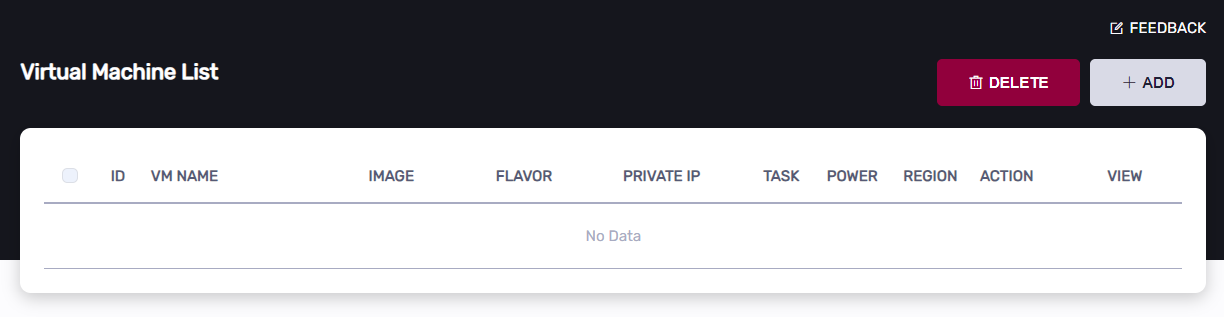
Click the “Add” button to add VMs:
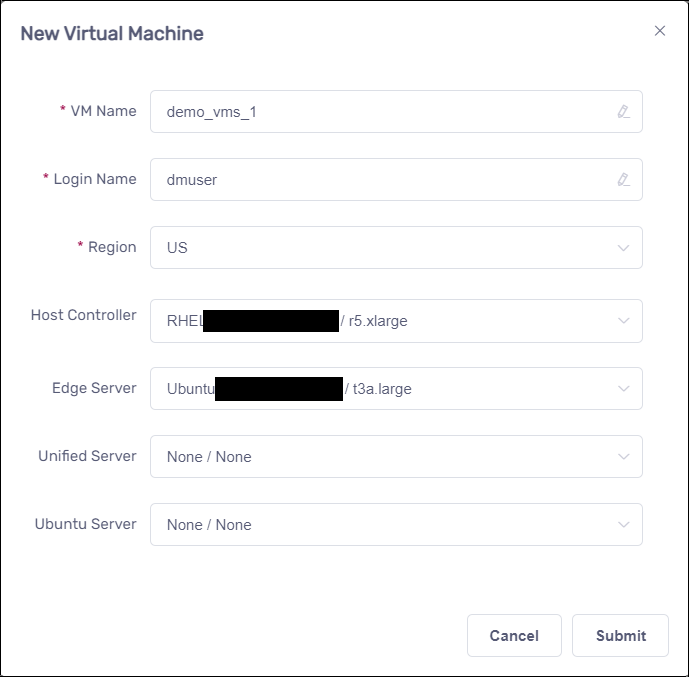
Create Host Controller and Edge Server#
In the popped up virtual machine dialog, enter in “VM Name” and “Login Name”, select “Host Controller” and “Edge Server” version
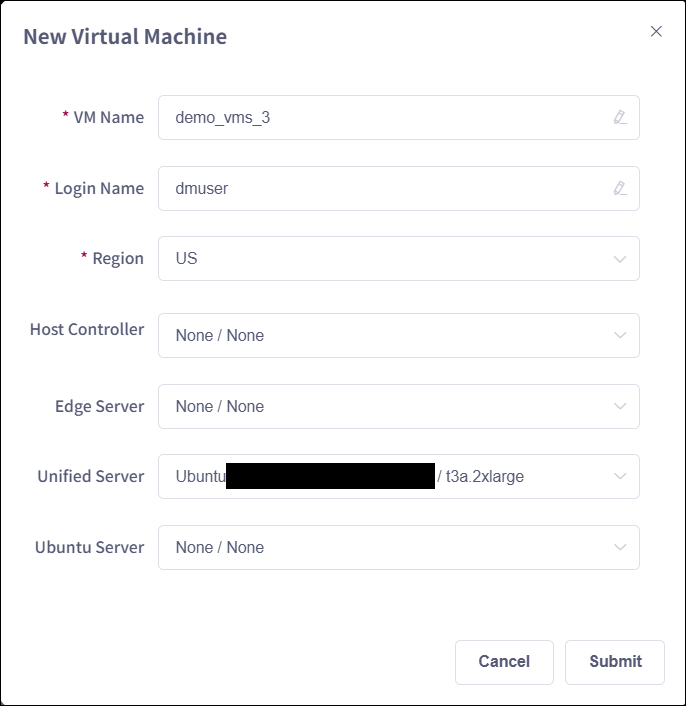
Create Unified Server#
As DPAT docker app running environment
Configure Unified Server#
Configure Unified Server by the following.
Replicate projects from Container Hub to Unified Server on Harbor
Create new endpoint
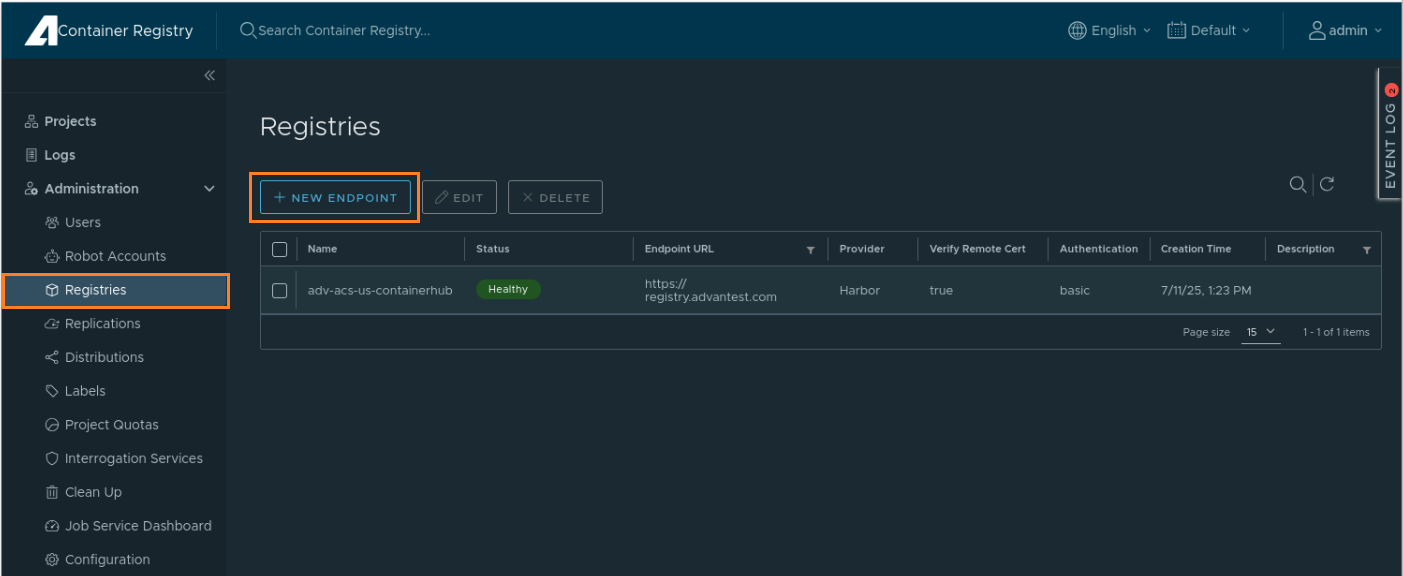
Click “NEW ENDPOINT” in “Registries” page
In the popped up “New Registry Endpoint” dialog, input these entries:
Name: “dpat-container-hub”
Endpoint URL: “https://registry.advantest.com”
Access ID: org user account
Access Secret: the account’s docker secret
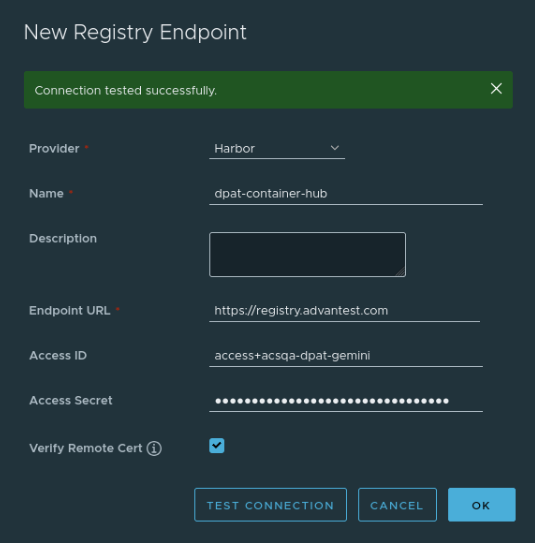
Then click “TEST CONNECTION”, after that you will see “Connection Tested successfully” on the top of the dialog, click “OK” to submit the new endpoint to Harbor finally.
Create new replication rule
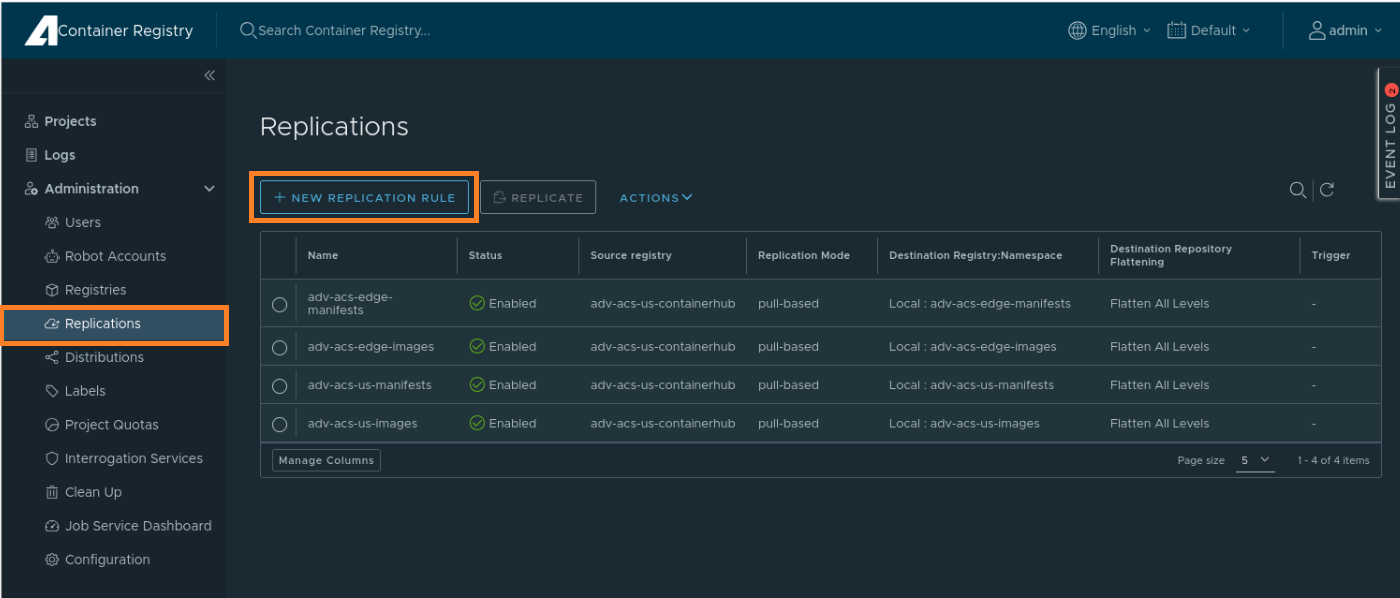
Click “NEW REPLICATION RULE” in “Replications” page
In the popped up “New Replication Rule” dialog, input or select these entries:
Name: input “container-hub-repl”
Replication Mode: click “Pull-based”
Source registry: select “dpat-container-hub”
Flattening: select “Flatten All Levels”
Trigger Mode: select “Scheduled”
Cron String: input “0 0 */2 * * *” (This means that the replication will be executed every 2 hours automatically)
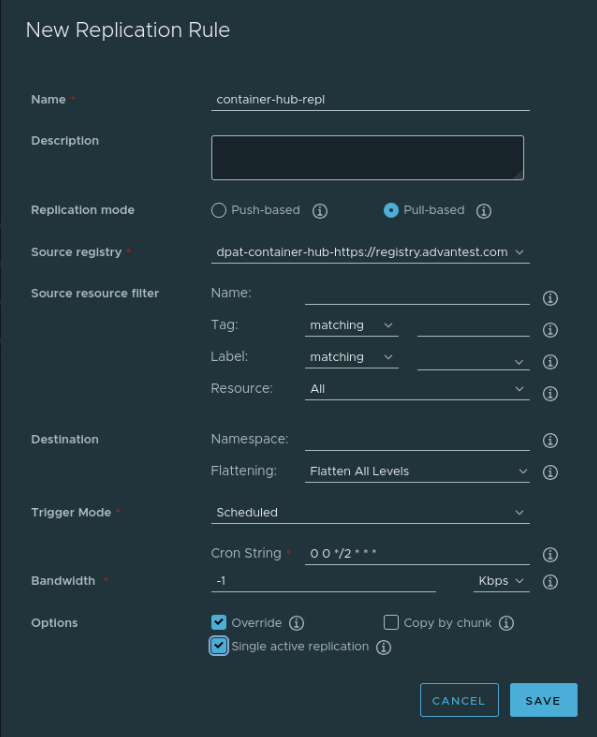
Then click “SAVE” to submit the new replication rule
Replicate Container hub manually
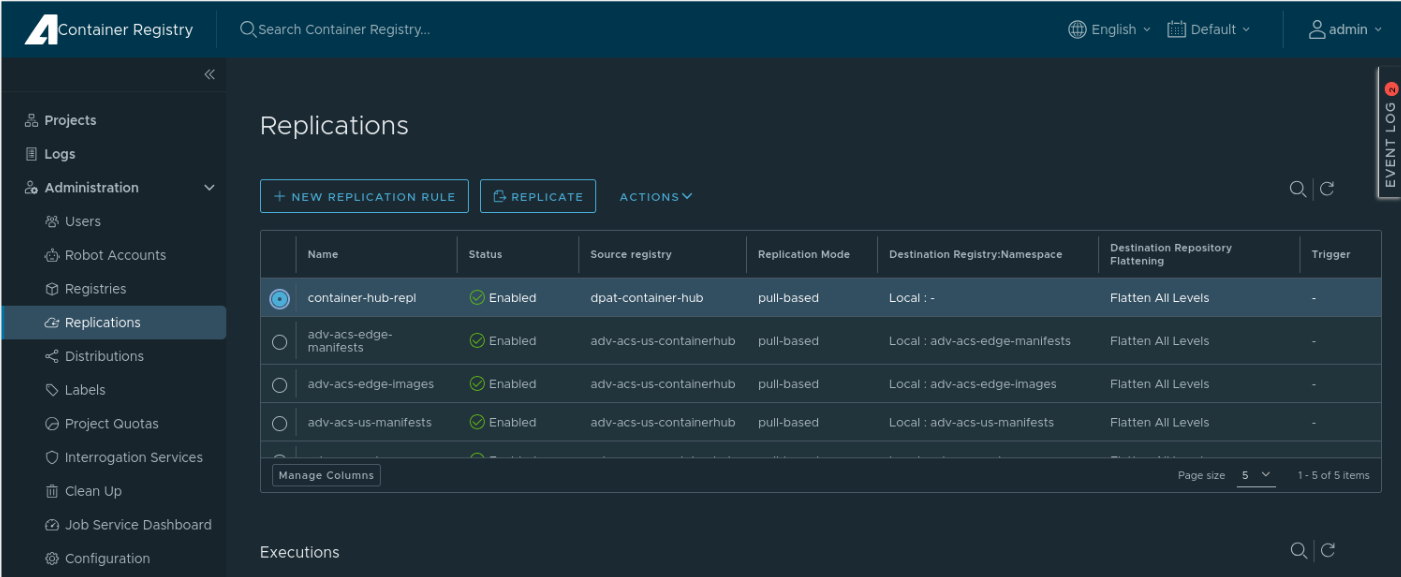
Select “container-hub-repl” replication rule, click “Replicate” button
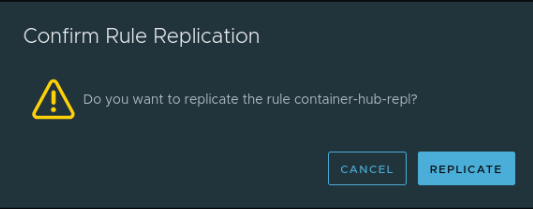
Click “REPLICATE” button in popped up confirm dialog
Wait about 20 minutes for completing replication
You can confirm in “Executions” section of page, the “status” is Succeeded, the “Success Rate” is 100%
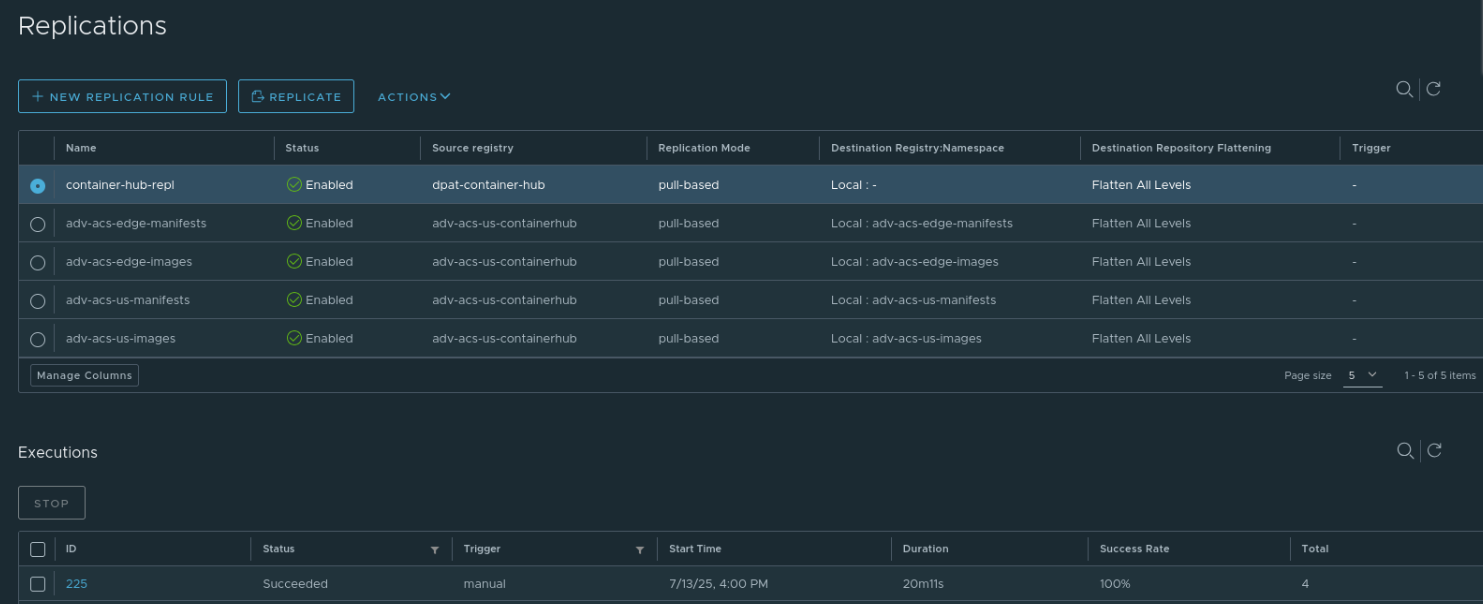
Now the DPAT app image is replicated to Unified Server.
Note that: If you have modified DPAT app code and push new docker image to Container hub, you need to manually trigger replication again from the “Replications” page or wait for the automatic replication done.
Application Deployment#
Note: The ‘adv-dpat’ project we are using below is for demonstration purposes. You will need to replace it with your own project accordingly.
Transfer demo program to the Host Controller#
Download the test program
Click to download the application-dpat-v3.1.0-RHEL74.tar.gz archive(a simple DPAT algorithm in Python) to your computer.
Note that: If you are using “RHEL79_ST8.7” VM image for running SMT8, you can download the application-dpat-v3.1.0-RHEL79.tar.gz archive, it contains code enhanced SMT8 test method codes.
Transfer the file to the ~/apps directory on the Host Controller VM
Please refer to the “Transferring files” section of VM Management page.
In the VNC GUI, extract files in the bash console.
For RHEL74:
cd ~/apps/
tar -zxf application-dpat-v3.1.0-RHEL74.tar.gz
For RHEL79:
cd ~/apps/
tar -zxf application-dpat-v3.1.0-RHEL79.tar.gz
Create Docker image for DPAT app#
Load the DPAT base image.
cd ~
wget -N http://10.44.5.139/docker/python39-basic20.tar.zip
unzip python39-basic20.tar.zip
sudo docker load -i python39-basic20.tar
Log in with the org user account in order to push DPAT docker image
sudo docker login registry.advantest.com --username ChangeToUserName --password ChangeToSecret
Navigate to the DPAT app directory(~/apps/application-dpat-v3.1.0/rd-app_dpat_py), you can find these files:
Dockerfile: this is used for building DPAT app docker image
Click to expand!
FROM registry.advantest.com/adv-dpat/python39-basic:2.0

RUN yum install -y openssh-server
RUN mkdir /var/run/sshd
RUN echo 'root:root123' | chpasswd
RUN sed -i 's/PermitRootLogin prohibit-password/PermitRootLogin yes/' /etc/ssh/sshd_config
RUN sed 's@session\s*required\s*pam_loginuid.so@session optional pam_loginuid.so@g' -i /etc/pam.d/sshd
EXPOSE 22

# set nexus env variables
WORKDIR /
RUN python3.9 -m pip install pandas jsonschema
# copy run files and directories
RUN mkdir -p /dpat-app;chmod a+rwx /dpat-app
RUN mkdir -p /dpat-app/data;chmod a+rwx /dpat-app/data
RUN touch dpat-app/__init__.py
COPY workdir /dpat-app/workdir
COPY conf /dpat-app/conf

# RUN yum -y install libunwind-devel

RUN echo 'export $(cat /proc/1/environ |tr "\0" "\n" | xargs)' >> /etc/profile

ENV LOG_FILE_PATH "/tmp/app.log"
ENV DFF_FLAG="False"
WORKDIR /dpat-app/workdir
RUN /usr/bin/ssh-keygen -A
RUN echo "python3.9 -u /dpat-app/workdir/run_dpat.py&" >> /start.sh
RUN echo "/usr/sbin/sshd -D" >> /start.sh
CMD sh /start.sh
workdir/run_dpat.py: this is the main entry point for the DPAT app
Click to expand!
""" Copyright 2023 ADVANTEST CORPORATION. All rights reserved
    Dynamic Part Average Testing
    This module allows the user to calculate new limits based on dynamic part average
    testing. It is assumed that this is being run on the docker container with the Nexus
    connection.
"""

import json
from AdvantestLogging import logger
from dpat import DPAT
from oneapi import OneAPI, send_command


def run(nexus_data, args, save_result_fn):
    """Callback function that will be called upon receiving data from OneAPI

    Args:
        nexus_data: Datalog coming from nexus
        args: Arguments set by user
    """
    base_limits = args["baseLimits"]
    dpat = args["DPAT"]  # persistent class
    # compute dpat to get new high/low limits
    dpat.compute_once(nexus_data, base_limits, logger, args)
    results_df, new_limits = dpat.datalog()
    # logger.info(new_limits)
    if args["VariableControl"] == True:
        # Send dpat computed data back to Host Controller Nexus, the Smartest will receive the data from Nexus
        send_command(new_limits, "VariableControl")

    save_result_fn(results_df)


def main():
    """Set logger and call OneAPI"""
    logger.info("Starting DPAT datacolection and computation")
    logger.info("Copyright 2022 - Advantest America Inc")

    with open("data/base_limits.json", encoding="utf-8") as json_file:
        base_limits = json.load(json_file)

    args = {
        "DPAT": DPAT(),
        "baseLimits": base_limits,
        "config_path": "../conf/test_suites.ini",
        "setPathStorage": "data",
        "setPrefixStorage": "Demo_Dpat_123456",
        "saveStat": True,
        "VariableControl": False,  # Note: smt version is not visible from run_dpat, so it is set in sample.py in consumeLotStart
    }

    logger.info("Starting OneAPI")
    """ Create a OneAPI instance to receive Smartest data from Host Controller Nexus,
    the callback function "run" will be called when data received with the parameter in the "args"
    """
    oneapi = OneAPI(callback_fn=run, callback_args=args)
    oneapi.start()


if __name__ == "__main__":
    main()
workdir/dpat.py: this is the core algorithm for DPAT calculation
Click to expand!
""" Copyright 2023 ADVANTEST CORPORATION. All rights reserved

    This module contains a class and modules that allow the user to calculate new limits
    based on dynamic part average testing. It is assumed that this is being run on the
    docker container with the Nexus connection, being called by run_dpat.py.
"""

import time

from typing import Dict, List
import numpy as np
import pandas as pd


class DPAT:
    """
        This class allows the user to calculate new limits based on dynamic part average
        testing. It is assumed that this is being run on the docker container with the Nexus
        connection. Contains the following methods:

        * save_stat(results, df_cumulative_raw, args)
        * check_new_limits(df_new_limits)
        * save_stat(results, df_cumulative_raw, args)
        * stdev_compute(df_cumulative_raw, return_columns)
        * stdev_full_compute(df_stdev_full, return_columns)
        * iqr_full_compute(df_iqr_full, return_columns)
        * iqr_window_compute(df_iqr_full, return_columns)
        * stdev_compute(df_cumulative_raw, return_columns)
        * compute(df_base_limits, df_cumulative_raw, args)
        * datalog(nexus_data, df_base_limits, df_cumulative_raw, args)
        * run(data, args)
        * main - the main function of the script
    """
    def __init__(self, ):
        self.counter = 0

    def compute_once(self, nexus_data: str, base_limits: pd.DataFrame, logger, args):
        """Preprocess data, setting base values and columns. Should run only once.

        Args:
            nexus_data: string with pin values coming from nexus
            base_limits: DataFrame with base limits and parameters
            args: Dictionary with arguments set on main by user

        """
        self.counter += 1
        self.nexus_data = nexus_data
        self.args = args
        self.logger = logger
        self.df_base_limits, self.df_cumulative_raw = self.preprocess_data(base_limits)

    def save_stat(
            self, results: pd.DataFrame, df_cumulative_raw: pd.DataFrame, args: Dict
    ):
        """Save new limits and raw file into csv.

        Args:
            df_base_limits: DataFrame with base limits and parameters
            df_cumulative_raw: DataFrame with base values and columns
            args: Dictionary with argsurations parameters set from user
        """
        self.logger.info("=> Start save_stat")

        set_path_storage = args.get("setPathStorage")
        set_prefix_storage = args.get("setPrefixStorage")
        file_to_save_raw = set_path_storage + "/" + set_prefix_storage + "_raw.csv"
        file_to_save = set_path_storage + "/" + set_prefix_storage + "_stdev.csv"

        df_cumulative_raw.to_csv(file_to_save_raw, mode="a", index=False)
        results.to_csv(file_to_save, mode="a", index=False)

        self.logger.info("=> End save_stat")


    def check_new_limits(self, df_new_limits: pd.DataFrame) -> List:
        """Check new limits against existing thresholds and return ids that are off limits.
        The ids that don't meet the criteria are resetted to base limits.

        Args:
            df_new_limits: DataFrame calculated limits
        Return:
            test_ids: List with test_ids that are off the base limits
        """
        # New limits that are below user defined threshold
        below_threshold = df_new_limits[
            (df_new_limits["limit_Usl"] - df_new_limits["limit_Lsl"]) <
            (df_new_limits["PassRangeUsl"] - df_new_limits["PassRangeLsl"]) *
            df_new_limits["DPAT_Threshold"]
        ]
        # New limits that are below base lower limit
        below_lsl = df_new_limits[
            (df_new_limits["N"] < df_new_limits["DPAT_Samples"]) |
            (df_new_limits["limit_Lsl"] < df_new_limits["PassRangeLsl"]) *
            df_new_limits["DPAT_Threshold"]
        ]
        # New limits that are above base upper limit
        above_usl = df_new_limits[
            (df_new_limits["N"] < df_new_limits["DPAT_Samples"]) |
            (df_new_limits["limit_Usl"] > df_new_limits["PassRangeUsl"]) *
            df_new_limits["DPAT_Threshold"]
        ]

        test_ids = []
        if not above_usl.empty:
            test_ids = above_usl.TestId.unique().tolist()
        if not below_lsl.empty:
            test_ids = test_ids + below_lsl.TestId.unique().tolist()
        if not below_threshold.empty:
            test_ids = test_ids + below_threshold.TestId.unique().tolist()

        return list(set(test_ids)) # return unique testd_ids


    def stdev_full_compute(
            self, df_stdev_full: pd.DataFrame, return_columns: List
    ) -> pd.DataFrame:
        """Compute stdev method for specific test_ids.
        It updates the lower and upper limits following this formula:
            LPL = Mean - <dpat_sigma> * Sigma
            UPL = Mean + <dpat_sigma> * Sigma,
        Where <dpat_sigma> is an user defined parameter.

        Args:
            df_stdev_full: DataFrame with base values and columns
            return_columns: Columns to filter returned dataframe on
        Return:
            df_result: DataFrame with calculated stdev full and specific return columns
        """

        df_stdev_full.loc[:, 'N'] = \
            df_stdev_full.groupby('TestId')['TestId'].transform('count').values
        df_n = df_stdev_full[df_stdev_full["N"] > 1]
        df_one = df_stdev_full[df_stdev_full["N"] <= 1]

        mean = df_n.groupby("TestId")["PinValue"].transform(np.mean)
        stddev = df_n.groupby("TestId")["PinValue"].transform(lambda x: np.std(x, ddof=1))

        # Calculate new limits according to stdev sample
        df_n.loc[:, "stdev_all"] = stddev.values
        df_n.loc[:, "limit_Lsl"] = (mean - (stddev * df_n["DPAT_Sigma"])).values
        df_n.loc[:, "limit_Usl"] = (mean + (stddev * df_n["DPAT_Sigma"])).values

        # Assign base limits to test_ids with a single instance
        df_one.loc[:, "limit_Lsl"] = df_one["PassRangeLsl"].values
        df_one.loc[:, "limit_Usl"] = df_one["PassRangeUsl"].values
        df_one.loc[:, "stdev_all"] = 0

        df_result = pd.concat([df_one, df_n])[return_columns].drop_duplicates()

        return df_result


    def stdev_window_compute(
            self, df_stdev_window: pd.DataFrame, return_columns: List
    ) -> pd.DataFrame:
        """Compute stdev method for a specific window of test_ids.
        The mean and sigma are calculated for that window, and then
        it updates the lower and upper limits following this formula:
            LPL = Mean - <dpat_sigma> * Sigma
            UPL = Mean + <dpat_sigma> * Sigma,
        Where <dpat_sigma> is an user defined parameter.

        Args:
            df_stdev_window: DataFrame with base values and columns
            return_columns: Columns to filter returned dataframe on
        Return:
            df_result: DataFrame with calculated stdev window and specific return columns
        """
        df_stdev_window.loc[:, 'N'] = \
            df_stdev_window.groupby('TestId')['TestId'].transform('count').values
        # Separate test_ids with more than one sample
        df_n = df_stdev_window[df_stdev_window["N"] > 1]
        df_one = df_stdev_window[df_stdev_window["N"] <= 1]

        # Slice df according to window_size
        df_stdev_window.loc[:, 'N'] = df_stdev_window["DPAT_Window_Size"].values
        df_window_size = df_n.groupby("TestId").apply(
            lambda x: x.iloc[int(-x.N.values[0]):]
        ).reset_index(drop=True)

        if not df_n.empty:
            # Calculate new limits
            mean = df_window_size.groupby("TestId")["PinValue"].transform(np.mean).values
            stddev = df_window_size.groupby("TestId")["PinValue"].transform(
                lambda x: np.std(x, ddof=1)
            ).values

            df_n.loc[:, "stdev_all"] = stddev
            df_n.loc[:, "limit_Lsl"] = (mean - (stddev * df_n["DPAT_Sigma"])).values
            df_n.loc[:, "limit_Usl"] = (mean + (stddev * df_n["DPAT_Sigma"])).values

        # Assign base limits to test_ids with a single instance
        df_one.loc[:, "limit_Lsl"] = df_one["PassRangeLsl"].values
        df_one.loc[:, "limit_Usl"] = df_one["PassRangeUsl"].values
        df_one.loc[:, "stdev_all"] = 0
        df_result = pd.concat([df_n, df_one])[return_columns].drop_duplicates()

        return df_result


    def iqr_full_compute(
            self, df_iqr_full: pd.DataFrame, return_columns: List
    ) -> pd.DataFrame:
        """
        Update the lower and upper limits following this formula:
        IQR = Upper Quartile(Q3) - Lower Quartile(Q1)
        LSL = Q1 - 1.5 IQR
        USL = Q3 + 1.5 IQR
        Args:
            df_iqr_full: DataFrame with base values and columns
            return_columns: Columns to filter returned dataframe on
        Return:
            df_result: DataFrame with calculated IQR full and specific return columns
        """
        window_size = df_iqr_full["DPAT_Window_Size"]
        df_iqr_full.loc[:, "N"] = window_size
        df_iqr_full.loc[:, 'N'] = df_iqr_full.groupby('TestId')['TestId'].transform('count')

        # Separate test_ids with more than one sample
        df_n = df_iqr_full[df_iqr_full["N"] > 1]
        df_one = df_iqr_full[df_iqr_full["N"] <= 1]

        if not df_n.empty:
            # Compute new limits
            first_quartile = df_n.groupby("TestId").PinValue.quantile(q=0.25)
            upper_quartile = df_n.groupby("TestId").PinValue.quantile(q=0.75)
            iqr = upper_quartile - first_quartile
            multiple = df_n.groupby("TestId")["DPAT_IQR_Multiple"].first()

            df_n = df_n[return_columns].drop_duplicates()

            df_n.loc[:, "limit_Lsl"] = (first_quartile - (multiple * iqr)).values
            df_n.loc[:, "limit_Usl"] = (upper_quartile + (multiple * iqr)).values
            df_n.loc[:, "q1_all"] = first_quartile.values
            df_n.loc[:, "q3_all"] = upper_quartile.values

        # Assign base limits to test_ids with a single instance
        df_one.loc[:, "limit_Lsl"] = df_one["PassRangeLsl"].values
        df_one.loc[:, "limit_Usl"] = df_one["PassRangeUsl"].values
        df_one.loc[:, "q1_all"] = "N/A"
        df_one.loc[:, "q3_all"] = "N/A"

        df_result = pd.concat([df_n, df_one])[return_columns]

        return df_result


    def iqr_window_compute(
            self, df_iqr_window: pd.DataFrame, return_columns: List
    ) -> pd.DataFrame:
        """Before calculating the limits, it gets slices the df
        according to the <window_size>.
        Then it updates the lower and upper limits following this formula:
        IQR = Upper Quartile(Q3) - Lower Quartile(Q1)
        LSL = Q1 - 1.5 IQR
        USL = Q3 + 1.5 IQR
        Args:
            df_iqr_window: DataFrame with base values and columns
            return_columns: Columns to filter returned dataframe on
        Return:
            df_result: DataFrame with calculated IQR window and specific return columns
        """
        window_size = df_iqr_window["DPAT_Window_Size"].values
        df_iqr_window.loc[:, "window_size"] = window_size
        df_iqr_window.loc[:, 'N'] = \
            df_iqr_window.groupby('TestId')['TestId'].transform('count').values

        # Separate test_ids with more than one sample
        df_n = df_iqr_window[df_iqr_window["N"] > 1]
        df_one = df_iqr_window[df_iqr_window["N"] <= 1]

        if not df_n.empty:
            # Slice df according to window_size
            df_window_size = df_n.groupby("TestId").apply(
                lambda x: x.iloc[int(-x.window_size.values[0]):]
            ).reset_index(drop=True)

            # Calculate IQR
            first_quartile = df_window_size.groupby(["TestId"]).PinValue.quantile(q=0.25)
            upper_quartile = df_window_size.groupby(["TestId"]).PinValue.quantile(q=0.75)
            iqr = upper_quartile - first_quartile
            multiple = df_n.groupby("TestId")["DPAT_IQR_Multiple"].first()
            df_n = df_n[return_columns].drop_duplicates()

            # Calculate new limits
            df_n.loc[:, "limit_Lsl"] = (first_quartile - (multiple * iqr)).values
            df_n.loc[:, "limit_Usl"] = (upper_quartile + (multiple * iqr)).values
            df_n.loc[:, "q1_window"] = first_quartile.values
            df_n.loc[:, "q3_window"] = upper_quartile.values

        # Assign base limits to test_ids with a single instance
        df_one.loc[:, "limit_Lsl"] = df_one["PassRangeLsl"].values
        df_one.loc[:, "limit_Usl"] = df_one["PassRangeUsl"].values
        df_one.loc[:, "q1_window"] = "N/A"
        df_one.loc[:, "q3_window"] = "N/A"

        df_result = pd.concat([df_n, df_one])

        return df_result[return_columns]


    def stdev_sample_compute(
            self, df_cumulative_raw: pd.DataFrame, return_columns: List
    ) -> pd.DataFrame:
        """
        Updates the lower and upper limits following this formula:
            LSL = Mean - <multiplier> * Sigma
            USL = Mean + <multiplier> * Sigma
        Args:
            df_cumulative_raw: DataFrame with base values and columns
            return_columns: Columns to filter returned dataframe on
        Return:
            df_stdev: DataFrame with calculated stdev and specific return columns
        """
        df_stdev = df_cumulative_raw[
            (df_cumulative_raw["DPAT_Type"] == "STDEV") & (df_cumulative_raw["nbr_executions"] > 1)
        ]
        df_stdev_one = df_cumulative_raw[
            (df_cumulative_raw["DPAT_Type"] == "STDEV") & (df_cumulative_raw["nbr_executions"] <= 1)
        ]

        df_stdev.loc[:, "stdev"] = (
            (
                df_stdev["nbr_executions"] *
                df_stdev["sum_of_squares"] -
                df_stdev["sum"] * df_stdev["sum"]
            ) /
            (
                df_stdev["nbr_executions"] *
                (df_stdev["nbr_executions"] - 1)
            )
        ).pow(1./2).values

        mean = (
            df_stdev["sum"] /
            df_stdev["nbr_executions"]
        )
        df_stdev.loc[:, "limit_Lsl"] = (mean - (df_stdev["stdev"] * df_stdev["DPAT_Sigma"])).values
        df_stdev.loc[:, "limit_Usl"] = (mean + (df_stdev["stdev"] * df_stdev["DPAT_Sigma"])).values

        df_stdev_one.loc[:, "limit_Lsl"] = df_stdev_one["PassRangeLsl"].values
        df_stdev_one.loc[:, "limit_Usl"] = df_stdev_one["PassRangeUsl"].values

        df_stdev = pd.concat([df_stdev, df_stdev_one])[return_columns]

        return df_stdev


    def compute(
            self, df_base_limits: pd.DataFrame, df_cumulative_raw: pd.DataFrame, args: Dict
    ) -> pd.DataFrame:
        """Compute new limits with standard deviation and IQR methods

        Args:
            df_base_limits: DataFrame with base limits and parameters
            df_cumulative_raw: DataFrame with base values and columns
            args: Dictionary with args parameters set from user

        Returns:
            new_limits: DataFrame with new limits after compute
        """
        self.logger.info("=>Starting Compute")
        # define base columns and fill with NANs
        df_cumulative_raw["stdev_all"] = np.nan
        df_cumulative_raw["stdev_window"] = np.nan
        df_cumulative_raw["stdev"] = np.nan
        df_cumulative_raw["q1_all"] = np.nan
        df_cumulative_raw["q3_all"] = np.nan
        df_cumulative_raw["q1_window"] = np.nan
        df_cumulative_raw["q3_window"] = np.nan
        df_cumulative_raw["N"] = np.nan
        df_cumulative_raw["limit_Lsl"] = np.nan
        df_cumulative_raw["limit_Usl"] = np.nan
        return_columns = [
            "TestId", "stdev_all", "stdev_window", "stdev", "q1_all", "q3_all", "q1_window",
            "q3_window", "N", "limit_Lsl", "limit_Usl", "PassRangeUsl", "PassRangeLsl"
        ]

        in_time = time.time()
        # Updates the lower and upper limits following this formula:
        #     LSL = Mean - <multiplier> * Sigma (sample)
        #     USL = Mean + <multiplier> * Sigma (sample)
        df_stdev = self.stdev_sample_compute(df_cumulative_raw, return_columns)

        # Updates the lower and upper limits according to sigma and mean
        df_stdev_full = df_cumulative_raw[df_cumulative_raw["DPAT_Type"] == "STDEV_FULL"]
        df_stdev_full = self.stdev_full_compute(df_stdev_full, return_columns)

        # Updates limits after getting a sample of <window_size>.
        df_stdev_window = df_cumulative_raw[
            df_cumulative_raw["DPAT_Type"] == "STDEV_RUNNING_WINDOW"
        ]
        df_stdev_window = self.stdev_window_compute(df_stdev_window, return_columns)

        # Calculates limits based on Interquartile range.
        # IQR = Upper Quartile(Q3) - Lower Quartile(Q1)
        # LSL = Q1 - 1.5 IQR
        # USL = Q3 + 1.5 IQR
        df_iqr_full = df_cumulative_raw[df_cumulative_raw["DPAT_Type"] == "IQR_FULL"]
        df_iqr_full = self.iqr_full_compute(df_iqr_full, return_columns)

        # Gets a sample of the dataframe of <window_size> and then uses IQR
        df_iqr_window = df_cumulative_raw[df_cumulative_raw["DPAT_Type"] == "IQR_RUNNING_WINDOW"]
        df_iqr_window = self.iqr_window_compute(df_iqr_window, return_columns)

        # Concatenates the 5 methods in one dataframe
        new_limits_df = pd.concat(
            [df_stdev, df_stdev_full, df_stdev_window, df_iqr_full, df_iqr_window]
        ).sort_values(by = "TestId").reset_index(drop=True)

        # Check for test_ids that don't meet the criteria and are off limits
        test_ids_off_limits = self.check_new_limits(new_limits_df.merge(df_base_limits))

        if len(test_ids_off_limits) > 0:
            # Sets the off limits ids to the base values
            new_limits_df.loc[new_limits_df.TestId.isin(test_ids_off_limits), "limit_Usl"] = \
                new_limits_df["PassRangeUsl"]
            new_limits_df.loc[new_limits_df.TestId.isin(test_ids_off_limits), "limit_Lsl"] = \
                new_limits_df["PassRangeLsl"]

        new_limits_df["PassRangeLsl"] = new_limits_df["limit_Lsl"]
        new_limits_df["PassRangeUsl"] = new_limits_df["limit_Usl"]

        # Prepare dataframe with return format
        new_limits_df = new_limits_df.merge(
            df_cumulative_raw[["TestId", "TestSuiteName", "Testname", "pins"]].drop_duplicates(),
            on = "TestId", how="left"
        )
        print(new_limits_df)
        # Pick return columns and drop duplicates
        new_limits_df = new_limits_df[[
            "TestId", "TestSuiteName", "Testname", "pins", "PassRangeLsl", "PassRangeUsl",
        ]].drop_duplicates()

        out_time = time.time()
        self.logger.info("Compute Setup Test Time=%.3f} sec" % (out_time - in_time))

        # Parameter set by user, persists result in a file
        if args.get("saveStat"):
            self.save_stat(
                new_limits_df,
                df_cumulative_raw,
                args
            )
        self.logger.info("=> End Compute")

        return new_limits_df

    def format_result(self, result_df: pd.DataFrame) -> str:
        """Convert dataframe to string with variables to be used in VariableControl
        Follows this format: TESTID0,value TESTID1,value TESTID2,value
        """
        new_limits_df = result_df.copy()
        new_limits_df.sort_values(by="TestId").reset_index(drop=True, inplace=True)
        new_limits_df["test_id_var"] = "TestId" + new_limits_df.index.astype(str) + "," + \
            new_limits_df["TestId"].astype(str)

        test_ids = ' '.join(new_limits_df["test_id_var"])
        new_limits_df["limits_lsl"] = "limit_lsl." + new_limits_df["TestId"].astype(str) + \
            "," + new_limits_df["PassRangeLsl"].astype(str)

        new_limits_df["limits_usl"] = "limit_usl." + new_limits_df["TestId"].astype(str) + \
            "," + new_limits_df["PassRangeUsl"].astype(str)

        limits_lsl = ' '.join(new_limits_df["limits_lsl"])
        limits_usl = ' '.join(new_limits_df["limits_usl"])

        variable_command = limits_lsl + " " + test_ids + " " + limits_lsl + " " + limits_usl

        return variable_command

    def datalog(self,) -> str:
        """Prepare data and compute new limits

        Returns:
            variable_command: formatted command with new_limits after compute
        """
        nexus_data = self.nexus_data
        df_base_limits = self.df_base_limits
        df_cumulative_raw = self.df_cumulative_raw
        args = self.args

        self.logger.info("=> Starting Datalog")
        start = time.time()
        # Read string from nexus. Note that this does not read a csv file.
        current_result_datalog = nexus_data
        # Prepare base values and columns
        df_cumulative_raw = df_cumulative_raw[["TestId", "sum", "sum_of_squares", "nbr_executions"]]
        df_cumulative_raw = df_cumulative_raw.merge(current_result_datalog, on="TestId")
        df_cumulative_raw["nbr_executions"] = df_cumulative_raw["nbr_executions"] + 1
        df_cumulative_raw["sum"] = df_cumulative_raw["sum"] + df_cumulative_raw["PinValue"]
        df_cumulative_raw["sum_of_squares"] = (
            df_cumulative_raw["sum_of_squares"] +
            df_cumulative_raw["PinValue"] * df_cumulative_raw["PinValue"]
        )
        df_cumulative_raw = df_cumulative_raw.merge(
            df_base_limits, on="TestId", how="left"
        )
        # Compute new limits according to stdev and IQR methods
        new_limits_df = self.compute(
            df_base_limits,
            df_cumulative_raw,
            args
        )
        end = time.time()
        self.logger.info(
            "Total Setup/Parallel Computation and Return result Test Time=%f" % (end-start)
        )

        self.logger.info("=> End of Datalog:")
        # Format the result in Nexus Variable format

        return new_limits_df.copy(), self.format_result(new_limits_df)


    def preprocess_data(self, base_limits: pd.DataFrame) -> pd.DataFrame:
        """Initialize dataframes with base values before they can be computed

        Args:
            base_limits: Dict that contains base limits and parameters, extracted from json
                    file
        Returns:
            df_base_limits: DataFrame with base_limits and parameters
            cumulative_statistics: DataFrame with base columns and values to be used in
        compute

        """
        self.logger.info("=>Beginning of Init")

        df_base_limits = pd.DataFrame.from_dict(base_limits, orient="index")
        df_base_limits["TestId"] = df_base_limits.index.astype(int)
        df_base_limits.reset_index(inplace=True, drop=True)
        # Pick only columns of interest
        cumulative_statistics = df_base_limits[
            ["TestId", "PassRangeUsl", "PassRangeLsl", "DPAT_Sigma"]
        ].copy()
        # Set 0 to base columns
        cumulative_statistics["nbr_executions"] = 0
        cumulative_statistics["sum_of_squares"] = 0
        cumulative_statistics["sum"] = 0

        self.logger.info("=>End of Init")
        return df_base_limits, cumulative_statistics
workdir/oneapi.py:
By using OneAPI, this code performs the following functions:
Retrieves test data from the Host Controller and sends it to the DPAT algorithm.
Receives the DPAT results from the algorithm and sends them back to the Host Controller.
Click to expand!
from liboneAPI import Interface
from liboneAPI import AppInfo
from sample import SampleMonitor
from sample import sendCommand
import signal
import sys
import pandas as pd
from AdvantestLogging import logger


def send_command(result_str, command):
    # name = command;
    # param = "DriverEvent LotStart"
    # sendCommand(name, param)
    name = command
    param = "DriverEvent LotStart"
    sendCommand(name, param)

    name = command
    param = "Config Enabled=1 Timeout=10"
    sendCommand(name, param)

    name = command
    param = "Set " + result_str
    sendCommand(name, param)
    logger.info(result_str)


class OneAPI:
    def __init__(self, callback_fn, callback_args):
        self.callback_args = callback_args
        self.get_suite_config(callback_args["config_path"])
        self.monitor = SampleMonitor(
            callback_fn=callback_fn, callback_args=self.callback_args
        )

    def get_suite_config(self, config_path):  # conf/test_suites.ini
        test_suites = []
        with open(config_path) as f:
            for line in f:
                li = line.strip()
                if not li.startswith("#"):
                    test_suites.append(li.split(","))

        self.callback_args["test_suites"] = pd.DataFrame(
            test_suites, columns=["testNumber", "testName"]
        )

    def start(
        self,
    ):
        signal.signal(signal.SIGINT, quit)
        logger.info("Press 'Ctrl + C' to exit")

        me = AppInfo()
        me.name = "sample"
        me.vendor = "adv"
        me.version = "2.1.0"
        Interface.registerMonitor(self.monitor)
        NexusDataEnabled = True  # whether to enable Nexus Data Streaming and Control
        TPServiceEnabled = (
            True  # whether to enable TPService for communication with NexusTPI
        )
        res = Interface.connect(me, NexusDataEnabled, TPServiceEnabled)

        if res != 0:
            logger.info(f"Connect fail. code = {res}")
            sys.exit()

        logger.info("Connect succeed.")
        signal.signal(signal.SIGINT, quit)

        while True:
            signal.pause()

    def quit(
        self,
    ):
        res = Interface.disconnect()
        if res != 0:
            logger.info(f"Disconnect fail. code = {res}")
        sys.exit()
workdir/sample.py:
Click to expand!
from liboneAPI import Monitor
from liboneAPI import DataType
from liboneAPI import TestCell
from liboneAPI import Command
from liboneAPI import Interface
from liboneAPI import toHead
from liboneAPI import toSite
from liboneAPI import DFFData
from liboneAPI import QueryResponse
from AdvantestLogging import logger

import os
import sys
import pandas as pd
import json
import re
import threading
import time

def dff_query(condition: str) -> dict:
    dffData = {}
    query_res = QueryResponse()
    query_res = DFFData.createRawQueryRequest(condition)
    if query_res.code == DFFData.SUCCEED: jobID = query_res.result
    if query_res.code == DFFData.COMMON_ERROR: return dffData # error handling: response.errmsg

    while True:
        query_res = DFFData.getQueryTaskStatus(jobID)
        if query_res.code != DFFData.SUCCEED: return dffData # error handling: response.errmsg
        if query_res.result == "RUNNING": pass # need sleep a while then continue
        if query_res.result == "COMPLETED":
            query_res = DFFData.getQueryResult(jobID, "json")
            if query_res.code != DFFData.SUCCEED: pass # error handling: response.errmsg
            else :
                dffData = query_res.result
                break
    return dffData


def sendCommand(cmd_name, cmd_param):
    logger.info(f"Command -- send {cmd_name}")
    tc = TestCell()
    cmd = Command()
    cmd.param = cmd_param
    cmd.name = cmd_name
    cmd.reason = f"test {cmd.name} command"
    res = Interface.sendCommand(tc, cmd)
    if res != 0:
        logger.info("Send command fail. code = ")


class SampleMonitor(Monitor):
    def __init__(self, callback_fn, callback_args):
        Monitor.__init__(self)
        self.mTouchdownCnt = 0
        self.result_test_suite = []
        self.results_df = pd.DataFrame()
        self.callback_fn = callback_fn
        self.callback_args = callback_args
        self.callback_thread = None  # To keep track of the thread
        self.test_suites = callback_args["test_suites"]
        self.ecid = None
        self.time_nanosec = 0
        self.stime_nanosec = 0
        self.ratime_nanosec = 0
        self.atime_nanosec = 0
        self.dff_flag = os.environ.get("DFF_FLAG", "false").lower() in ('true', 't')
        self.dff_dict = {}
        self.dff_skip_ls = []

    def consumeLotStart(self, data):
        logger.info(sys._getframe().f_code.co_name)
        self.mTouchdownCnt = 0
        # Get SmarTest version
        smt_ver_info = data.get_TesterosVersion()
        print("VERSION:" + str(data.get_TesterosVersion()))
        self._smt_os_version = re.search(r"\d+", smt_ver_info).group()
        print("VERSION:" + self._smt_os_version)
        if self._smt_os_version == "8":  # for smarTest8
            self.callback_args["VariableControl"] = False
        elif self._smt_os_version == "7":
            self.callback_args["VariableControl"] = True
        self.lot_id = data.get_LotId()
        # logger.info(f"get_Timezone = {data.get_Timezone()}")
        # logger.info(f"get_SetupTime = {data.get_SetupTime()}")
        logger.debug(f"get_TimeStamp = {data.get_TimeStamp()}")
        # logger.info(f"get_StationNumber = {data.get_StationNumber()}")
        # logger.info(f"get_ModeCode = {data.get_ModeCode()}")
        # logger.info(f"get_RetestCode = {data.get_RetestCode()}")
        # logger.info(f"get_ProtectionCode = {data.get_ProtectionCode()}")
        # logger.info(f"get_BurnTimeMinutes = {data.get_BurnTimeMinutes()}")
        # logger.info(f"get_CommandCode = {data.get_CommandCode()}")
        logger.info(f"get_LotId = {data.get_LotId()}")
        # logger.info(f"get_PartType = {data.get_PartType()}")
        # logger.info(f"get_NodeName = {data.get_NodeName()}")
        # logger.info(f"get_TesterType = {data.get_TesterType()}")
        # logger.info(f"get_JobName = {data.get_JobName()}")
        # logger.info(f"get_JobRevision = {data.get_JobRevision()}")
        # logger.info(f"get_SublotId = {data.get_SublotId()}")
        # logger.info(f"get_OperatorName = {data.get_OperatorName()}")
        # logger.info(f"get_TesterosType = {data.get_TesterosType()}")
        # logger.info(f"get_TesterosVersion = {data.get_TesterosVersion()}")
        # logger.info(f"get_TestType = {data.get_TestType()}")
        # logger.info(f"get_TestStepCode = {data.get_TestStepCode()}")
        # logger.info(f"get_TestTemperature = {data.get_TestTemperature()}")
        # logger.info(f"get_UserText = {data.get_UserText()}")
        # logger.info(f"get_AuxiliaryFile = {data.get_AuxiliaryFile()}")
        # logger.info(f"get_PackageType = {data.get_PackageType()}")
        # logger.info(f"get_FamilyId = {data.get_FamilyId()}")
        # logger.info(f"get_DateCode = {data.get_DateCode()}")
        # logger.info(f"get_FacilityId = {data.get_FacilityId()}")
        # logger.info(f"get_FloorId = {data.get_FloorId()}")
        # logger.info(f"get_ProcessId = {data.get_ProcessId()}")
        # logger.info(f"get_OperationFreq = {data.get_OperationFreq()}")
        # logger.info(f"get_SpecName = {data.get_SpecName()}")
        # logger.info(f"get_SpecVersion = {data.get_SpecVersion()}")
        # logger.info(f"get_FlowId = {data.get_FlowId()}")
        # logger.info(f"get_SetupId = {data.get_SetupId()}")
        # logger.info(f"get_DesignRevision = {data.get_DesignRevision()}")
        # logger.info(f"get_EngineeringLotId = {data.get_EngineeringLotId()}")
        # logger.info(f"get_RomCode = {data.get_RomCode()}")
        # logger.info(f"get_SerialNumber = {data.get_SerialNumber()}")
        # logger.info(f"get_SupervisorName = {data.get_SupervisorName()}")
        # logger.info(f"get_HeadNumber = {data.get_HeadNumber()}")
        # logger.info(f"get_SiteGroupNumber = {data.get_SiteGroupNumber()}")

        # headsiteList = data.get_TotalHeadSiteList()
        # logger.info("get_TotalHeadSiteList:", end="")
        # for headsite in headsiteList:
        #     logger.info(f" {headsite}", end="")
        # logger.info("")

        # logger.info(f"get_ProberHandlerType = {data.get_ProberHandlerType()}")
        # logger.info(f"get_ProberHandlerId = {data.get_ProberHandlerId()}")
        # logger.info(f"get_ProbecardType = {data.get_ProbecardType()}")
        # logger.info(f"get_ProbecardId = {data.get_ProbecardId()}")
        # logger.info(f"get_LoadboardType = {data.get_LoadboardType()}")
        # logger.info(f"get_LoadboardId = {data.get_LoadboardId()}")
        # logger.info(f"get_DibType = {data.get_DibType()}")
        # logger.info(f"get_DibId = {data.get_DibId()}")
        # logger.info(f"get_CableType = {data.get_CableType()}")
        # logger.info(f"get_CableId = {data.get_CableId()}")
        # logger.info(f"get_ContactorType = {data.get_ContactorType()}")
        # logger.info(f"get_ContactorId = {data.get_ContactorId()}")
        # logger.info(f"get_LaserType = {data.get_LaserType()}")
        # logger.info(f"get_LaserId = {data.get_LaserId()}")
        # logger.info(f"get_ExtraEquipType = {data.get_ExtraEquipType()}")
        # logger.info(f"get_ExtraEquipId = {data.get_ExtraEquipId()}")

    def consumeLotEnd(self, data):
        logger.info(sys._getframe().f_code.co_name)
        self.mTouchdownCnt = 0
        logger.debug(f"get_TimeStamp = {data.get_TimeStamp()}")
        # logger.info(f"get_DisPositionCode = {data.get_DisPositionCode()}")
        # logger.info(f"get_UserDescription = {data.get_UserDescription()}")
        # logger.info(f"get_ExecDescription = {data.get_ExecDescription()}")

    def consumeWaferStart(self, data):
        logger.info(sys._getframe().f_code.co_name)
        self.mTouchdownCnt = 0
        self.dff_dict = {}
        self.dff_skip_ls = []
        logger.debug(f"get_TimeStamp = {data.get_TimeStamp()}")
        # logger.info(f"get_WaferSize = {data.get_WaferSize()}")
        # logger.info(f"get_DieHeight = {data.get_DieHeight()}")
        # logger.info(f"get_DieWidth = {data.get_DieWidth()}")
        # logger.info(f"get_WaferUnits = {data.get_WaferUnits()}")
        # logger.info(f"get_WaferFlat = {data.get_WaferFlat()}")
        # logger.info(f"get_CenterX = {data.get_CenterX()}")
        # logger.info(f"get_CenterY = {data.get_CenterY()}")
        # logger.info(f"get_PositiveX = {data.get_PositiveX()}")
        # logger.info(f"get_PositiveY = {data.get_PositiveY()}")
        # logger.info(f"get_HeadNumber = {data.get_HeadNumber()}")
        # logger.info(f"get_SiteGroupNumber = {data.get_SiteGroupNumber()}")
        # logger.info(f"get_WaferId = {data.get_WaferId()}")

    def consumeWaferEnd(self, data):
        logger.info(sys._getframe().f_code.co_name)
        self.mTouchdownCnt = 0
        logger.debug(f"get_TimeStamp = {data.get_TimeStamp()}")
        # logger.info(f"get_HeadNumber = {data.get_HeadNumber()}")
        # logger.info(f"get_SiteGroupNumber = {data.get_SiteGroupNumber()}")
        # logger.info(f"get_TestedCount = {data.get_TestedCount()}")
        # logger.info(f"get_RetestedCount = {data.get_RetestedCount()}")
        # logger.info(f"get_GoodCount = {data.get_GoodCount()}")
        # logger.info(f"get_WaferId = {data.get_WaferId()}")
        # logger.info(f"get_UserDescription = {data.get_UserDescription()}")
        # logger.info(f"get_ExecDescription = {data.get_ExecDescription()}")

    def consumeTestStart(self, data):
        logger.info(sys._getframe().f_code.co_name)
        logger.debug(f"get_TimeStamp = {data.get_TimeStamp()}")
        # headsiteList = data.get_HeadSiteList()
        # logger.info("get_HeadSiteList:", end="")
        # for headsite in headsiteList:
        #     logger.info(f" {liboneAPI.toHead(headsite)}|{liboneAPI.toSite(headsite)}", end="")
        # logger.info("")

    def consumeTestEnd(self, data):
        logger.info(sys._getframe().f_code.co_name)
        self.mTouchdownCnt += 1
        logger.debug(f"get_TimeStamp = {data.get_TimeStamp()}")
        # cnt = data.get_ResultCount()
        # logger.info(f"get_ResultCount = {cnt}")
        # for index in range(0, cnt):
        #     tempU32 = data.query_HeadSite(index)
        #     logger.info(f"Head = {liboneAPI.toHead(tempU32)} Site = {liboneAPI.toSite(tempU32)}")
        #     logger.info(f"query_PartFlag = {data.query_PartFlag(index)}")
        #     logger.info(f"query_NumOfTest = {data.query_NumOfTest(index)}")
        #     logger.info(f"query_SBinResult = {data.query_SBinResult(index)}")
        #     logger.info(f"query_HBinResult = {data.query_HBinResult(index)}")
        #     logger.info(f"query_XCoord = {data.query_XCoord(index)}")
        #     logger.info(f"query_YCoord = {data.query_YCoord(index)}")
        #     logger.info(f"query_TestTime = {data.query_TestTime(index)}")
        #     logger.info(f"query_PartId = {data.query_PartId(index)}")
        #     logger.info(f"query_PartText = {data.query_PartText(index)}")

    def consumeTestFlowStart(self, data):
        logger.info(sys._getframe().f_code.co_name)
        logger.debug(f"get_TimeStamp = {data.get_TimeStamp()}")
        # logger.info(f"get_TestFlowName = {data.get_TestFlowName()}")

    def consumeTestFlowEnd(self, data):
        logger.info(sys._getframe().f_code.co_name)
        logger.debug(f"get_TimeStamp = {data.get_TimeStamp()}")
        # logger.info(f"get_TestFlowName = {data.get_TestFlowName()}")

    def consumeParametricTest(self, data):
        logger.info(sys._getframe().f_code.co_name)
        cnt = data.get_ResultCount()
        # logger.info(f"get_ResultCount = {cnt}")
        for index in range(0, cnt):
            tempU32 = data.query_HeadSite(index)
            # logger.info(f"Head = {toHead(tempU32)} Site = {toSite(tempU32)}")
            # logger.info(f"query_TestNumber = {data.query_TestNumber(index)}")
            # logger.info(f"query_TestText = {data.query_TestText(index)}")
            # logger.info(f"query_LowLimit = {data.query_LowLimit(index)}")
            # logger.info(f"query_HighLimit = {data.query_HighLimit(index)}")
            # logger.info(f"query_Unit = {data.query_Unit(index)}")
            # logger.info(f"query_TestFlag = {data.query_TestFlag(index)}")
            # logger.info(f"query_Result = {data.query_Result(index)}")
            test_num = data.query_TestNumber(index)
            if self._smt_os_version == "8":  # for smarTest8
                test_name = data.query_TestSuite(index)
            else:
                test_name = data.query_TestText(index).split(":")[0]
            result = data.query_Result(index)

            row = [test_num, test_name, result]
            # use only specific test_names and test_numbers define in config file
            # if test_num in set(self.test_suites.testNumber) or test_name in set(self.test_suites.testName):
            self.result_test_suite.append(row)

            if self.result_test_suite:
                # set result test suite as a dataframe
                test_suite_df = pd.DataFrame(self.result_test_suite, columns=["TestId", "testName", "PinValue"])
                # get previous lots data to calculate limit
                if self.dff_flag and test_num not in self.dff_skip_ls:
                    DPAT_Samples = 5 # default value
                    # get DPAT Sample from base limit if it exists
                    try:
                        if test_name in self.callback_args["baseLimits"].keys():
                            DPAT_Samples = int(self.callback_args["baseLimits"][test_name]["DPAT_Samples"])
                    except Exception as e:
                        logger.error(f"Cannot retrieve the DPAT_Samples of {test_name}, {e}")
                    # get previous data using DFF if n_sample is less than DPAT Sample
                    if (test_suite_df["TestId"] == test_num).sum() < DPAT_Samples:
                        # retrieve previous data if it hasn't been fetched before
                        if test_num not in self.dff_dict.keys():
                            dff_data_ls:list = self.consumeDFFData(test_num)
                            self.dff_dict[test_num] = dff_data_ls
                        dff_data:list = self.dff_dict[test_num]
                        # concatenate previous data to test_suite_df if data is not empty
                        if dff_data:
                            # skip the test number if dff data has already been retrieved
                            self.dff_skip_ls.append(test_num)
                            # append the previous data to result test suite
                            for result in dff_data:
                                self.result_test_suite.append([test_num, test_name, result])
                            # concatenate previous data
                            df = pd.DataFrame({
                                "TestId": [test_num] * len(dff_data),
                                "testName": [test_name] * len(dff_data),
                                "PinValue": dff_data
                            })
                            test_suite_df = pd.concat([test_suite_df, df], axis=0)
                # execute DPAT using test_suite_df
                self.callback_thread = self.threaded_callback(
                    self.callback_fn,
                    test_suite_df,
                    self.callback_args
                )

    def consumeFunctionalTest(self, data):
        logger.info(sys._getframe().f_code.co_name)
        # cnt = data.get_ResultCount()
        # logger.info(f"get_ResultCount = {cnt}")
        # for index in range(0, cnt):
        #     tempU32 = data.query_HeadSite(index)
        #     logger.info(f"Head = {liboneAPI.toHead(tempU32)} Site = {liboneAPI.toSite(tempU32)}")
        #     logger.info(f"query_TestNumber = {data.query_TestNumber(index)}")
        #     logger.info(f"query_TestText = {data.query_TestText(index)}")
        #     logger.info(f"query_TestFlag = {data.query_TestFlag(index)}")
        #     logger.info(f"query_CycleCount = {data.query_CycleCount(index)}")
        #     logger.info(f"query_NumberFail = {data.query_NumberFail(index)}")
        #     failpins = data.query_FailPins(index)
        #     logger.info("query_FailPins:", end="")
        #     for p in failpins:
        #         logger.info(f" {p}", end="")
        #     logger.info("")
        #     logger.info(f"query_VectNam = {data.query_VectNam(index)}")

    def consumeMultiParametric(self, data):
        logger.info(sys._getframe().f_code.co_name)
        # cnt = data.get_ResultCount()
        # logger.info(f"get_ResultCount = {cnt}")
        # for index in range(0, cnt):
        #     tempU32 = data.query_HeadSite(index)
        #     logger.info(f"Head = {liboneAPI.toHead(tempU32)} Site = {liboneAPI.toSite(tempU32)}")
        #     logger.info(f"query_TestNumber = {data.query_TestNumber(index)}")
        #     logger.info(f"query_TestText = {data.query_TestText(index)}")
        #     logger.info(f"query_LowLimit = {data.query_LowLimit(index)}")
        #     logger.info(f"query_HighLimit = {data.query_HighLimit(index)}")
        #     logger.info(f"query_Unit = {data.query_Unit(index)}")
        #     logger.info(f"query_TestFlag = {data.query_TestFlag(index)}")
        #     results = data.query_Results(index)
        #     logger.info(f"query_Results: Cnt({len(results)})", end="")
        #     for r in results:
        #         logger.info(f" {r}", end="")
        #     logger.info("")

    def consumeDeviceData(self, data):
        logger.info(sys._getframe().f_code.co_name)
        # logger.info(f"get_TestProgramDir = {data.get_TestProgramDir()}")
        # logger.info(f"get_TestProgramName = {data.get_TestProgramName()}")
        # logger.info(f"get_TestProgramPath = {data.get_TestProgramPath()}")
        # logger.info(f"get_PinConfig = {data.get_PinConfig()}")
        # logger.info(f"get_ChannelAttribute = {data.get_ChannelAttribute()}")
        # cnt = data.get_BinInfoCount()
        # logger.info(f"get_BinInfoCount = {cnt}")
        # for index in range(0, cnt):
        #     logger.info(f"SBin({data.query_SBinNumber(index)})", end="")
        #     logger.info(f" Name({data.query_SBinName(index)})", end="")
        #     logger.info(f" Type({data.query_SBinType(index)})", end="")
        #     logger.info(f" HBin({data.query_HBinNumber(index)})", end="")
        #     logger.info(f" Name({data.query_HBinName(index)})", end="")
        #     logger.info(f" Type({data.query_HBinType(index)})", end="")
        #     logger.info("")

    def consumeUserDefinedData(self, data):
        logger.info(sys._getframe().f_code.co_name)
        # userDefined = data.get_UserDefined()
        # for key,value in userDefined.items():
        #     logger.info(f"[{key}] = {value}")

    def consumeFile(self, data):
        logger.info(sys._getframe().f_code.co_name)
        # logger.info(f"get_FileName = {data.get_FileName()}")

    def consumeDatalogText(self, data):
        logger.info(sys._getframe().f_code.co_name)
        logger.debug(f"get_TimeStamp = {data.get_TimeStamp()}")
        # logger.info(f"get_DataLogText = {data.get_DataLogText()}")

    def consumeDFFData(self, test_number: str) -> list:
        result:list = []
        sql_query:str = f"""
        SELECT lot_id, x_coord, y_coord, p.result, p.low_limit, p.high_limit
        FROM rtdi_table t
        LATERAL VIEW explode(t.ptr) as p
        WHERE p.test_number = {test_number}
        AND lot_id= '{self.lot_id}'
        """
        dff_data:dict = dff_query(sql_query)
        # get previous result data if it's not empty
        if dff_data:
            parsed_data:dict = json.loads(dff_data)
            result:list = pd.DataFrame(parsed_data)["result"].tolist()
            logger.info(f"Retrieve previous data from DFF, data = {result}")
        else:
            logger.info("There is no previous data available from DFF")
            logger.debug(f"The query is '{sql_query}'")
        return result

    def consumeData(self, tc, data):
        try:
            datatype = data.getType()
            if datatype == DataType.DATA_TYP_PRODUCTION_LOTSTART:
                self.consumeLotStart(data)
            elif datatype == DataType.DATA_TYP_PRODUCTION_LOTEND:
                if self.callback_thread:
                    self.callback_thread.join()  # Wait for the callback thread to finish
                self.consumeLotEnd(data)
            elif datatype == DataType.DATA_TYP_PRODUCTION_WAFERSTART:
                self.consumeWaferStart(data)
            elif datatype == DataType.DATA_TYP_PRODUCTION_WAFEREND:
                self.consumeWaferEnd(data)
            elif datatype == DataType.DATA_TYP_PRODUCTION_TESTSTART:
                self.consumeTestStart(data)
            elif datatype == DataType.DATA_TYP_PRODUCTION_TESTEND:
                self.consumeTestEnd(data)
            elif datatype == DataType.DATA_TYP_PRODUCTION_TESTFLOWSTART:
                self.consumeTestFlowStart(data)
            elif datatype == DataType.DATA_TYP_PRODUCTION_TESTFLOWEND:
                self.consumeTestFlowEnd(data)
            elif datatype == DataType.DATA_TYP_MEASURED_PARAMETRIC:
                self.consumeParametricTest(data)
            elif datatype == DataType.DATA_TYP_MEASURED_FUNCTIONAL:
                self.consumeFunctionalTest(data)
            elif datatype == DataType.DATA_TYP_MEASURED_MULTI_PARAM:
                self.consumeMultiParametric(data)
            elif datatype == DataType.DATA_TYP_DEVICE:
                self.consumeDeviceData(data)
            elif datatype == DataType.DATA_TYP_USERDEFINED:
                self.consumeUserDefinedData(data)
            elif datatype == DataType.DATA_TYP_FILE:
                self.consumeFile(data)
            elif datatype == DataType.DATA_TYP_DATALOGTEXT:
                self.consumeDatalogText(data)
            else:
                logger.error(f"Unknown data type: {datatype.name}, data number: {datatype.value}")
        except Exception as e:
            logger.error(f"Something went wrong while executing the data handler, dataType = {datatype.name}", exc_info=True)
            logger.error(f"Error message: {e}")

    def consumeTPSend(self, tc, data):
        self.time_nanosec = time.time_ns()
        logger.info(f"Received data from {tc.testerId}, length is {len(data)} ")
        logger.info(f"Received data from {tc.testerId}, string is {data} ")
        lastdata = data
        datastr = str(data)
        if "SKU_NAME" in data:
            jsonObj = json.loads(datastr)
            logger.info(datastr)
            for key in jsonObj:
                logger.debug(key, " : ", jsonObj[key])
                logger.debug(f"TPRequest: dataval= {jsonObj[key]}")
                dataval = jsonObj[key]
                for subkey in dataval:
                    logger.debug(f"subkey= {subkey}")
                    logger.debug(f"subval= {jsonObj[key][subkey]}")

            self.ecid = jsonObj["SKU_NAME"]["MSFT_ECID"]
            logger.info(f"TPSend: {self.ecid=}")
            self.testname = jsonObj["SKU_NAME"]["testname"]
            logger.info(f"TPSend: {self.testname=}")
            # print("TPSend: hosttime= ",hosttime)
            packetstr = jsonObj["SKU_NAME"]["packetString"]
            logger.info(f"TPSend: {packetstr=}")
            rawvalue = jsonObj["SKU_NAME"]["RawValue"]
            logger.info(f"TPSend: {rawvalue=}")
            lolim = jsonObj["SKU_NAME"]["LowLim"]
            logger.info(f"TPSend: {lolim=}")
            hilim = jsonObj["SKU_NAME"]["HighLim"]
            logger.info(f"TPSend: {hilim=}")
        self.stime_nanosec = time.time_ns()
        return

    def consumeTPRequest(self, tc, request):
        logger.info(f"consumeTPRequest Start")
        logger.info(f"Received request from {tc.testerId}, command is {request}")

        # Parse the JSON request
        jsonObj = json.loads(request)
        action = jsonObj.get("request")

        # Initialize variables with example values (replace with actual values as needed)
        adjHBin = -1
        self.ratime_nanosec = time.time_ns()
        if action == "health":
            print("TPRqst: processing health")
            response = "success"
        elif action == "CalcNewLimits" and self.ecid and "PassRangeLsl" in self.results_df:
            # Construct the dictionary with all the fields
            edge_min_value = self.results_df["PassRangeLsl"].iloc[-1]
            edge_max_value = self.results_df["PassRangeUsl"].iloc[-1]
            selfatime_nanosec = time.time_ns()
            response_dict = {
                "MSFT_ECID": self.ecid,
                "testname": self.testname,
                "AdjLoLim": str(edge_min_value),
                "AdjHiLim": str(edge_max_value),
                "AdjHBin": str(adjHBin),
                "SendAppTime": str(self.time_nanosec),
                "SendAppRetTime": str(self.stime_nanosec),
                "RqstAppTime": str(self.ratime_nanosec),
                "RqstAppRetTime": str(self.atime_nanosec),
            }
            # TODO: Clarify what each of these time requests mean.
            # Convert the dictionary to a JSON string using json.dumps

            response = json.dumps(response_dict)

        else:
            response = json.dumps({"response": "empty or unsupported action"})

        logger.info(f"Response: {response}")
        return response

    def threaded_callback(self, callback_fn, dataframe, callback_args):
        thread = threading.Thread(
            target=callback_fn, args=(dataframe, callback_args, self.save_result)
        )
        thread.start()
        return thread

    def save_result(self, df):
        self.results_df = df
Build image
cd ~/apps/application-dpat-v3.1.0/rd-app_dpat_py
sudo docker build ./ --tag=registry.advantest.com/acsqa-dpat-gemini/dpat:ExampleTag
Push image
sudo docker push registry.advantest.com/acsqa-dpat-gemini/dpat:ExampleTag
Create App descriptor project on the Container Hub#
Login to the ACS Container Hub using the org admin account.
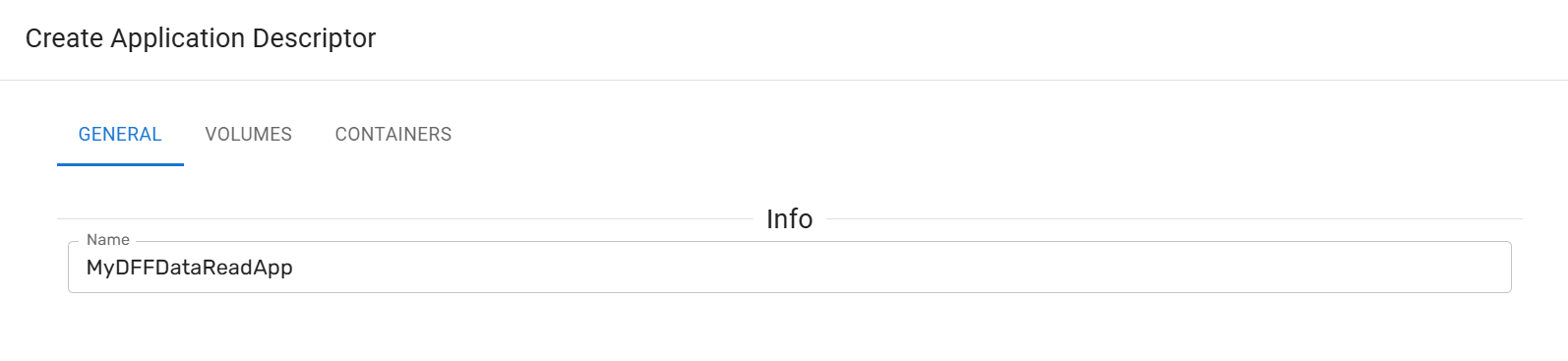
Open “Applications” -> “1:N Application Descriptors” page, click “New Application Descriptor” button
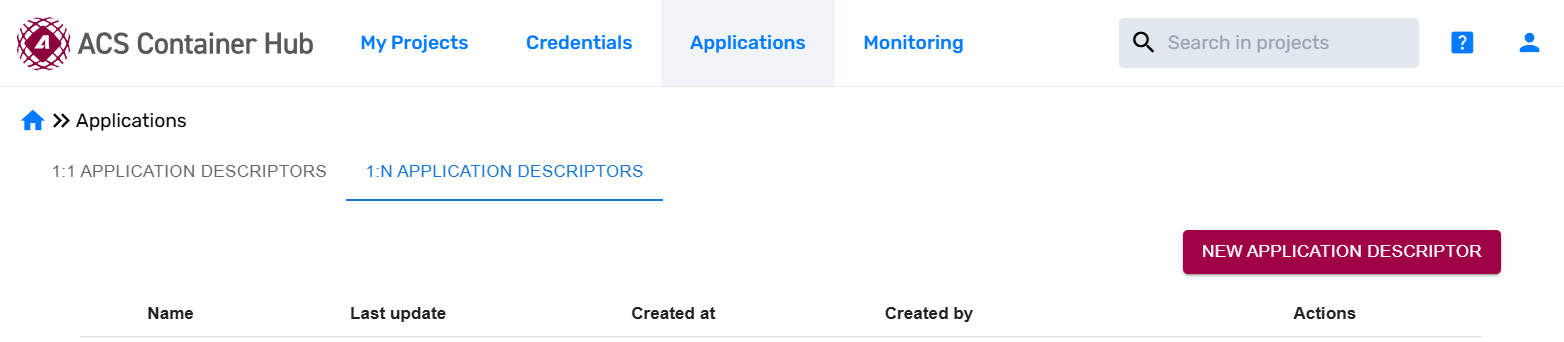
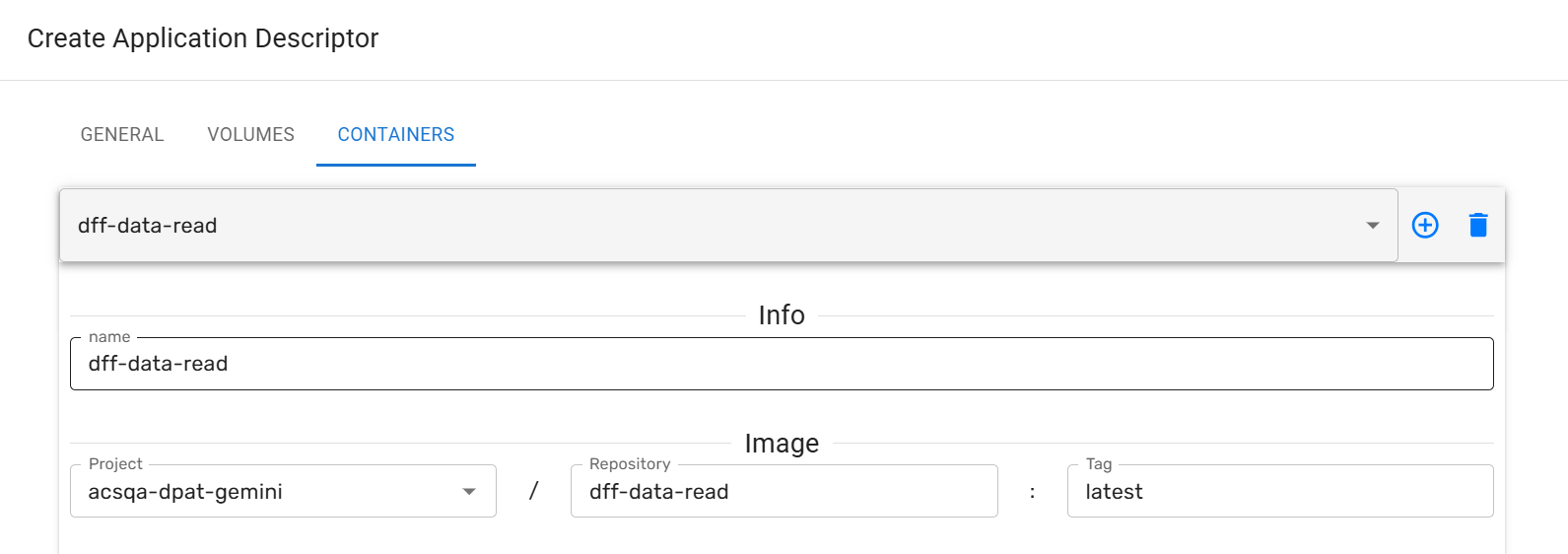
In the popped up “Create Application Descriptor” dialog, input/select these fields, then click “CREATE” button
GENERAL -> Name: MyDpat1N
CONTAINERS -> Info -> name: dpat-app
CONTAINERS -> Image: acsqa-dpat-gemini/dpat:ExampleTag
CONTAINERS -> Environment Variables:
STREAM_ENABLED=true

Replicate the new created App Descriptor to Unified Server on Harbor#
Select “container-hub-repl” replication rule, click “Replicate” button
Click “REPLICATE” button in popped up confirm dialog
Submit feedback for app descriptor running request.#
Click “FEEDBACK” on the right top of “Virtual Machine” page.
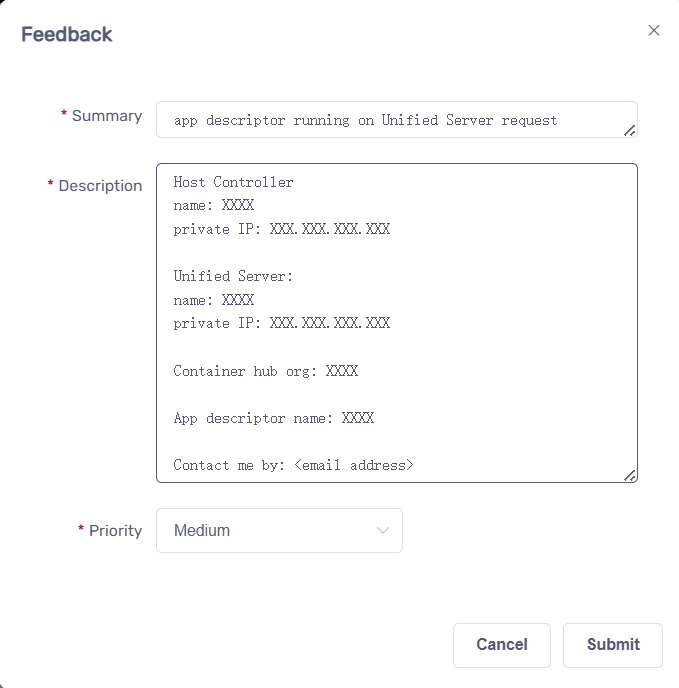
In the popped up “Feedback” dialog
add Summary
app descriptor running on Unified Server request
add Description
Host Controller
name: XXXX
private IP: XXX.XXX.XXX.XXX

Unified Server:
name: XXXX
private IP: XXX.XXX.XXX.XXX

Container hub org: XXXX

App descriptor name: XXXX

Contact me by: <email address>
Click “Submit”
Once the request is completed, the DPAT application will run on the Unified Server.
Configure acs_nexus service#
Edit /opt/acs/nexus/conf/acs_nexus.ini file.
Make sure the Auto_Deploy option is false
[Auto_Deploy]
Enabled=false
Make sure the Enabled option is true in TestFloor_Server section
[TestFloor_Server]
Enabled=true
Control_Port=5001
Data_Port=5002
Heartbeat_Cycle=10 ;; unit s
Restart acs_nexus service
sudo systemctl restart acs_nexus
Note, please ensure you have switched to SmarTest8
Running the SmarTest Test Program#
Start SmarTest8
Run the script that starts SmartTest8:
cd ~/apps/application-dpat-v3.1.0
sh start_smt8.sh
Nexus TPI
You can find “NexusTPI.jar” in the project build path. This dynamic library is used for bi-directional communicating between Test program and Nexus.
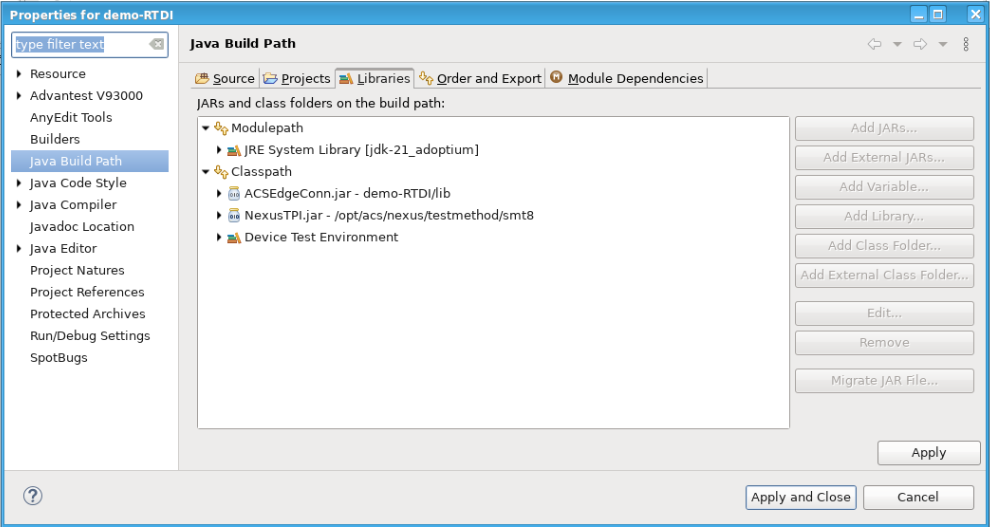
Modify code to communicate DPAT app on Unified Server. You can find the involking NexusTPI codes in in the test method file measuredValueFileReader.java
Search and change the code below.
before:
NexusTPI.target("dpat-app").timeout(1);
after:
NexusTPI.location("aus").target("dpat-app").timeout(1);
The completed code is as follow.
Click to expand!
/**
*
*/
package misc;

import java.time.Instant;
import java.util.List;
import java.util.Random;

import org.json.JSONObject;

import base.SOCTestBase;
import nexus.tpi.NexusTPI;
import shifter.GlobVars;
import xoc.dta.annotations.In;
import xoc.dta.datalog.IDatalog;
import xoc.dta.datatypes.MultiSiteDouble;
import xoc.dta.measurement.IMeasurement;
import xoc.dta.resultaccess.IPassFail;
import xoc.dta.testdescriptor.IFunctionalTestDescriptor;
import xoc.dta.testdescriptor.IParametricTestDescriptor;


/**
* ACS Variable control and JSON write demo using SMT8 for Washington
*/

@SuppressWarnings("unused")

public class measuredValueFileReader extends SOCTestBase {

    public IMeasurement measurement;
    public IParametricTestDescriptor pTD;
    public IFunctionalTestDescriptor fTD;
    public IFunctionalTestDescriptor testDescriptor;

    class params {
        private String _upper;
        private String _lower;
        private String _unit;

        public params(String _upper, String lower, String _unit) {
            super();
            this._upper = _upper;
            this._lower = lower;
            this._unit = _unit;
        }
    }

    @In
    public String testName;
    String testtext = "";
    String powerResult = "";
    int hb_value;
    double edge_min_value = 0.0;
    double edge_max_value = 0.0;
    double prev_edge_min_value = 0.0;
    double prev_edge_max_value = 0.0;
    boolean c0Flag = false;
    boolean c1Flag = false;
    String[] ecid_strs = {"U6A629_03_x1_y2", "U6A629_03_x1_y3", "U6A629_03_x1_y4", "U6A629_03_x2_y1", "U6A629_03_x2_y2", "U6A629_03_x2_y6", "U6A629_03_x2_y7", "U6A629_03_x3_y10", "U6A629_03_x3_y2", "U6A629_03_x3_y3", "U6A629_03_x3_y7", "U6A629_03_x3_y8", "U6A629_03_x3_y9", "U6A629_03_x4_y11", "U6A629_03_x4_y1", "U6A629_03_x4_y2", "U6A629_03_x4_y4", "U6A629_03_x5_y0", "U6A629_03_x5_y10", "U6A629_03_x5_y11", "U6A629_03_x5_y3", "U6A629_03_x5_y7", "U6A629_03_x5_y8", "U6A629_03_x6_y3", "U6A629_03_x6_y5", "U6A629_03_x6_y6", "U6A629_03_x6_y7", "U6A629_03_x7_y4", "U6A629_03_x7_y7", "U6A629_03_x8_y2", "U6A629_03_x8_y3", "U6A629_03_x8_y5", "U6A629_03_x8_y7", "U6A629_04_x1_y2", "U6A629_04_x2_y2", "U6A629_04_x2_y3", "U6A629_04_x2_y7", "U6A629_04_x2_y8", "U6A629_04_x2_y9", "U6A629_04_x3_y10", "U6A629_04_x3_y2", "U6A629_04_x3_y3", "U6A629_04_x3_y4", "U6A629_04_x3_y5", "U6A629_04_x3_y7", "U6A629_04_x3_y9", "U6A629_04_x4_y11", "U6A629_04_x4_y2", "U6A629_04_x4_y7", "U6A629_04_x4_y8", "U6A629_04_x4_y9", "U6A629_04_x5_y4", "U6A629_04_x5_y7", "U6A629_04_x6_y5", "U6A629_04_x6_y6", "U6A629_04_x6_y8", "U6A629_04_x7_y10", "U6A629_05_x2_y2", "U6A629_05_x3_y0", "U6A629_05_x4_y1", "U6A629_05_x4_y2", "U6A629_05_x5_y1", "U6A629_05_x5_y2", "U6A629_05_x5_y3", "U6A629_05_x6_y1", "U6A629_05_x6_y3", "U6A629_05_x7_y2", "U6A629_05_x7_y3", "U6A629_05_x8_y3", "U6A633_10_x4_y9", "U6A633_10_x8_y9", "U6A633_11_x2_y2", "U6A633_11_x3_y9", "U6A633_11_x5_y2", "U6A633_11_x6_y10", "U6A633_11_x6_y5", "U6A633_11_x7_y9", "U6A633_11_x8_y8", "U6A633_11_x8_y9", "U6A633_12_x2_y3", "U6A633_12_x2_y5", "U6A633_12_x2_y7", "U6A633_12_x2_y9", "U6A633_12_x3_y1", "U6A633_12_x3_y9", "U6A633_12_x4_y0", "U6A633_12_x5_y1", "U6A633_12_x7_y4"};
    int ecid_ptr = 0;
    long hnanosec = 0;
    List<Double> current_values;

    protected IPassFail digResult;
    public String pinList;

    @Override
    public void update() {
    }

    @SuppressWarnings("static-access")
    @Override
    public void execute() {

        int resh;
        int resn;
        int resx;

        IDatalog datalog = context.datalog(); // use in case logDTR does not work

        int index = 0;
        Double raw_value = 0.0;
        String rvalue = "";
        String low_limitStr = "";
        String high_limitStr = "";

        Double low_limit = 0.0;
        Double high_limit = 0.0;
        String unit = "";
        String packetValStr = "";
        String sku_name = "";
        String command = "";

        /**
        * This portion of the code will read an external datalog file in XML and compare data in
        * index 0 to the limit variables received from Nexus
        */
        if (testName.contains("RX_gain_2412_C0_I[1]")) {
            try {
                NexusTPI.location("aus").target("dpat-app").timeout(1);
                Instant hinstant = Instant.now();
                GlobVars.hsnanoSeconds = (hinstant.getEpochSecond()*1000000000) + hinstant.getNano();
                System.out.println("HealthCheck Start time= "+GlobVars.hsnanoSeconds);

                String jsonHRequest = "{\"health\":\"DoHealthCheck\"}";
                int hres = NexusTPI.request(jsonHRequest);
                System.out.println("BiDir-request Response= "+hres);
                String hresponse = NexusTPI.getResponse();
                System.out.println("BiDir:: getRequest Health Response:"+hresponse);

                Instant instant = Instant.now();
                GlobVars.henanoSeconds = (instant.getEpochSecond()*1000000000) + instant.getNano();
                System.out.println("HealthCheck Stop time= "+GlobVars.henanoSeconds);
                hparse(hresponse);
        } catch (Exception e) {
                e.printStackTrace();
                throw e;
            }
        }

        if ((testName.contains("RX_gain_2412_C0_I[1]")) && (!c0Flag)) {
            try {
                misc.XMLParserforACS.params key = GlobVars.c0_current_params.get(testName);
            } catch (Exception e) {
                System.out.println("Missing entry in maps for this testname : " + testName);
                return;
            }

            try {
                GlobVars.c0_current_values = new XMLParserforACS().parseXMLandReturnRawValues(testName);
            } catch (NullPointerException e) {
                System.out.print("variable has null value, exiting.\n");
            }

            try {
                GlobVars.c0_current_params = new XMLParserforACS().parseXMLandReturnLimitmap(testName);
            } catch (NullPointerException e) {
                System.out.print("variable has null value, exiting.\n");
            }
            c0Flag = true;
            low_limit = Double.parseDouble(GlobVars.c0_current_params.get(testName).getLower());
            high_limit = Double.parseDouble(GlobVars.c0_current_params.get(testName).getUpper());
            unit = GlobVars.c0_current_params.get(testName).getUnit();
            GlobVars.orig_LoLim = low_limit;
            GlobVars.orig_HiLim = high_limit;
        }
        if ((testName.contains("RX_gain_2412_C1_I[1]")) && (!c1Flag)) {
            try {
                misc.XMLParserforACS.params key = GlobVars.c1_current_params.get(testName);
            } catch (Exception e) {
                System.out.println("Missing entry in maps for this testname : " + testName);
                return;
            }

            try {
                GlobVars.c1_current_values = new XMLParserforACS().parseXMLandReturnRawValues(testName);
            } catch (NullPointerException e) {
                System.out.print("variable has null value, exiting.\n");
            }

            try {
                GlobVars.c1_current_params = new XMLParserforACS().parseXMLandReturnLimitmap(testName);
            } catch (NullPointerException e) {
                System.out.print("variable has null value, exiting.\n");
            }
            c1Flag = true;
            low_limit = Double.parseDouble(GlobVars.c1_current_params.get(testName).getLower());
            high_limit = Double.parseDouble(GlobVars.c1_current_params.get(testName).getUpper());
            unit = GlobVars.c1_current_params.get(testName).getUnit();
        }

        if (testName.contains("RX_gain_2412_C1_I[1]")) {
            index = GlobVars.c1_index;
            raw_value = GlobVars.c1_current_values.get(index);
            low_limit = Double.parseDouble(GlobVars.c1_current_params.get(testName).getLower());
            high_limit = Double.parseDouble(GlobVars.c1_current_params.get(testName).getUpper());
            unit = GlobVars.c1_current_params.get(testName).getUnit();
        }
        if (testName.contains("RX_gain_2412_C0_I[1]")) {
            index = GlobVars.c0_index;
            raw_value = GlobVars.c0_current_values.get(index);
            low_limit = Double.parseDouble(GlobVars.c0_current_params.get(testName).getLower());
            high_limit = Double.parseDouble(GlobVars.c0_current_params.get(testName).getUpper());
            unit = GlobVars.c0_current_params.get(testName).getUnit();
        }

        if (testName.contains("RX_gain_2412_C0_I[1]")) {
            int res;
            try {
                System.out.println("ECID["+ecid_ptr+"] = "+ecid_strs[ecid_ptr]);
                packetValStr = buildPacketString();

                rvalue = String.valueOf(raw_value);
                low_limitStr = String.valueOf(low_limit);
                high_limitStr = String.valueOf(high_limit);

                sku_name = "{\"SKU_NAME\":{\"MSFT_ECID\":\""+ecid_strs[ecid_ptr]+"\",\"testname\":\""+testName+"\",\"RawValue\":\""+rvalue+"\",\"LowLim\":\""+low_limitStr+"\",\"HighLim\":\""+high_limitStr+"\",\"packetString\":\""+packetValStr+"\"}}";
                System.out.println("\nJson String sku_name length= "+sku_name.length());

                Instant instant = Instant.now();
                GlobVars.ssnanoSeconds = (instant.getEpochSecond()*1000000000) + instant.getNano();
                System.out.println("TPSend Start Time= "+GlobVars.ssnanoSeconds);

                res = NexusTPI.send(sku_name);

                Instant pinstant = Instant.now();
                GlobVars.senanoSeconds = (pinstant.getEpochSecond()*1000000000) + pinstant.getNano();
                System.out.println("TPSend Return Time= "+GlobVars.senanoSeconds);
            } catch (Exception e) {
                e.printStackTrace();
                throw e;
            }

            try {
                long millis = 200;
                Thread.sleep(millis);
            } catch (InterruptedException e1) {
                e1.printStackTrace();
            }

            try {
                Instant ginstant = Instant.now();
                GlobVars.rsnanoSeconds = (ginstant.getEpochSecond()*1000000000) + ginstant.getNano();
                System.out.println("RqstHostTime TPRqst Start= "+GlobVars.rsnanoSeconds);

                String jsonRequest = "{\"request\":\"CalcNewLimits\"}";

                res = NexusTPI.request(jsonRequest);
                System.out.println("BiDir-request Response= "+res);
                String response = NexusTPI.getResponse();
                System.out.println("BiDir-getRequest Response= "+response);

                Instant rinstant = Instant.now();
                GlobVars.renanoSeconds = (rinstant.getEpochSecond()*1000000000) + rinstant.getNano();
                System.out.println("Request Return Time= "+GlobVars.renanoSeconds);
                parse(response);
            } catch (Exception e) {
                e.printStackTrace();
                throw e;
            }

        }
        if ((testName.contains("RX_gain_2412_C0_I[1]")) && (!GlobVars.limFlag)) {
            low_limit = Double.parseDouble(GlobVars.adjlolimStr);
            high_limit = Double.parseDouble(GlobVars.adjhilimStr);
        }
        System.out.println(testName + ": TestingText= " + testtext);
        System.out.println(testName + ": low_limit= " + low_limit);
        System.out.println(testName + ": high_limit= " + high_limit);

        System.out.println("Simulated Test Value Data ");
        System.out.println(
                "testname = " + testName + "  lower = " + low_limit + "  upper = " + high_limit
                        + " units = " + unit + " raw_value = " + raw_value + " index = " + index);

        MultiSiteDouble rawResult = new MultiSiteDouble();
        for (int site : context.getActiveSites()) {
            rawResult.set(site, raw_value);
        }
        /** This performs datalog limit evaluation and p/f result and EDL datalogging */

        pTD.setHighLimit(high_limit);
        pTD.setLowLimit(low_limit);
        pTD.evaluate(rawResult);

        if (testName.contains("RX_gain_2412_C0_I[1]")) {
            if (GlobVars.c0_index < (GlobVars.c0_current_values.size() - 1)) {
                GlobVars.c0_index++;
            } else {
                GlobVars.c0_index = 0;
            }
        }
        if (testName.contains("RX_gain_2412_C1_I[1]")) {
            if (GlobVars.c1_index < (GlobVars.c1_current_values.size() - 1)) {
                GlobVars.c1_index++;
            } else {
                GlobVars.c1_index = 0;
            }
        }

        if (pTD.getPassFail().get()) {
            System.out.println(
                    "Sim Value Test " + testName + "\n************ PASSED **************\n");
        } else {
            System.out.println(testName + "\n************ FAILED *****************\n");
        }

        if (testName.contains("RX_gain_2412_C0_I[1]")) {
            // HTTP performance data: HealthCheck, POST, GET transactions
            System.out.println("************ Nexus BiDir Performance Data ******************");
            System.out.println("HealthCheck: Host to App Time= "+GlobVars.perf_times.get("Health_h-a_time"));
            System.out.println("HealthCheck: App to Host Time= "+GlobVars.perf_times.get("Health_a-h_time"));
            System.out.println("HealthCheck: Round-Trip Time= "+GlobVars.perf_times.get("Health_rtd_time"));

            System.out.println("TPSend: Host to App Time= "+GlobVars.perf_times.get("Send_h-a_time"));
            System.out.println("TPSend: App to Host Time= "+GlobVars.perf_times.get("Send_a-h_time"));
            System.out.println("TPSend: Round-Trip Time= "+GlobVars.perf_times.get("Send_rtd_time"));

            System.out.println("TPRequest: Host to App Time= "+GlobVars.perf_times.get("Request_h-a_time"));
            System.out.println("TPRequest: App to Host Time= "+GlobVars.perf_times.get("Request_a-h_time"));
            System.out.println("TPRequest: Round-Trip Time= "+GlobVars.perf_times.get("Request_rtd_time"));
            System.out.println("*****************************************************");
        }

        // Clear large strings used for http post
        packetValStr = "";
        sku_name = "";

        ecid_ptr++;
        if (ecid_ptr >= ecid_strs.length) {
            ecid_ptr = 0;
        }
    }

    public static String parse(String responseBody) {
        if (responseBody.contains("MSFT_ECID")) {
            JSONObject results = new JSONObject(responseBody);
            String ecid = results.getString("MSFT_ECID");
            System.out.println("MSFT_ECID: " + ecid);
            String testName = results.getString("testname");
            System.out.println("testname: " + testName);
            GlobVars.adjlolimStr = results.getString("AdjLoLim");
            System.out.println("AdjLoLim: " + GlobVars.adjlolimStr);
            GlobVars.adjhilimStr = results.getString("AdjHiLim");
            System.out.println("AdjHiLim: " + GlobVars.adjhilimStr);
            String sndappTime = results.getString("SendAppTime");
            System.out.println("SendAppTime: " + sndappTime);
            String sretappTime = results.getString("SendAppRetTime");
            System.out.println("SendAppRetTime: " + sretappTime);
            String rappTime = results.getString("RqstAppTime");
            System.out.println("RqstAppTime: " + rappTime);
            String rretappTime = results.getString("RqstAppRetTime");
            System.out.println("RqstAppRetTime: " + rretappTime);

            long atime = Long.parseLong(sndappTime);
            long artime = Long.parseLong(sretappTime);
            long ratime = Long.parseLong(rappTime);
            long rartime = Long.parseLong(rretappTime);

            double deltaSndTime = (atime - GlobVars.ssnanoSeconds)/1000000.0; // Delta time in msec
            GlobVars.perf_times.put("Send_h-a_time", deltaSndTime);
            System.out.println("Delta TPSend h-a app-host time: "+deltaSndTime+" msec");
            double deltaSndRetTime = (GlobVars.senanoSeconds - artime)/1000000.0; // Delta time in msec
            GlobVars.perf_times.put("Send_a-h_time", deltaSndRetTime);
            System.out.println("Delta TPSend a-h time: "+deltaSndRetTime+" msec");
            double sendDeltaTime = (GlobVars.senanoSeconds - GlobVars.ssnanoSeconds)/1000000.0; // Delta time in msec
            GlobVars.perf_times.put("Send_rtd_time", sendDeltaTime);
            System.out.println("Delta TPSend transaction time: "+sendDeltaTime+" msec");

            double deltaRqstTime = (ratime - GlobVars.rsnanoSeconds)/1000000.0; // Delta time in msec
            GlobVars.perf_times.put("Request_h-a_time", deltaRqstTime);
            System.out.println("Delta TPRequest h-a time: "+deltaRqstTime+" msec");
            double deltaRqstRetTime = (GlobVars.renanoSeconds - rartime)/1000000.0; // Delta time in msec
            GlobVars.perf_times.put("Request_a-h_time", deltaRqstRetTime);
            System.out.println("Delta TPRequest a-h time: "+deltaRqstRetTime+" msec");
            double gadeltaTime = (GlobVars.renanoSeconds - GlobVars.rsnanoSeconds)/1000000.0; // Delta time in msec
            GlobVars.perf_times.put("Request_rtd_time", gadeltaTime);
            // GlobVars.rsnanoSeconds = 0; // clear for next device
        }
        return responseBody;
    }

    public static String hparse(String responseBody) {
        String hatime = "0";
        if (responseBody.contains("health")) {
            JSONObject results = new JSONObject(responseBody);
            hatime = results.getString("health");
            long hatimeval = Long.parseLong(hatime);
            System.out.println("health: " + hatime);

            double hsdeltaTime = (hatimeval - GlobVars.hsnanoSeconds)/1000000.0; // Delta time in msec
            double hrdeltaTime = (GlobVars.henanoSeconds  - hatimeval)/1000000.0; // Delta time in msec
            double rhdeltaTime = (GlobVars.henanoSeconds  - GlobVars.hsnanoSeconds)/1000000.0; // Delta time in msec

            GlobVars.perf_times.put("Health_h-a_time", hsdeltaTime);
            GlobVars.perf_times.put("Health_a-h_time", hrdeltaTime);
            GlobVars.perf_times.put("Health_rtd_time", rhdeltaTime);
            System.out.println("Delta health h-a time: "+hsdeltaTime+" msec");
            System.out.println("Delta health a-h time: "+hrdeltaTime+" msec");
            System.out.println("Delta health rtd time: "+rhdeltaTime+" msec");
        }

        return hatime;
    }

    public String buildPacketString() {
        int packetSel = GlobVars.packetSelector;
        int[] cnt_values = { 203, 1000, 10000, 100000, 1000000,
                2000000, 3000000, 4000000, 5000000,
                6000000, 7000000, 8000000, 9000000,
                10000000, 20000000, 40000000, 60000000, 80000000, 100000000,
                120000000, 140000000, 160000000, 180000000, 200000000, 220000000,
                240000000, 260000000, 280000000, 300000000};
        System.out.println("PacketID: " + packetSel);
        String pktStr = "";
        int chrcnt = cnt_values[packetSel] - 200; // was 146;
        System.out.println("Chrcnt: " + chrcnt);
        String valstr = "";

        String BUILDCHARS = "ABCDEFGHIJKLMNOPQRSTUVWXYZ1234567890";
        StringBuilder packetstr = new StringBuilder();
        Random rnd = new Random();
        while (packetstr.length() < chrcnt) { // length of the random string.
            int index = (int) (rnd.nextFloat() * BUILDCHARS.length());
            packetstr.append(BUILDCHARS.charAt(index));
        }
        pktStr = packetstr.toString();
        GlobVars.packetStr = pktStr;

        return pktStr;
    }

}
Activate Testflow:
To activate the Testflow, you’ll need to right-click on the Testflow entry at the bottom and then select “Activate…”:
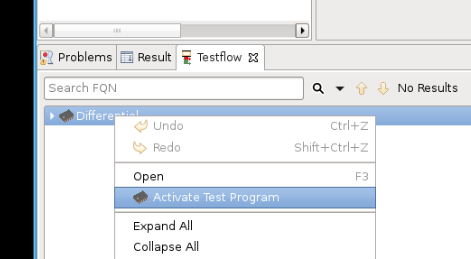
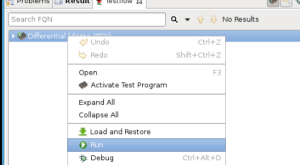
Right-click on the “Differential” and then “Activate” and “Run”.
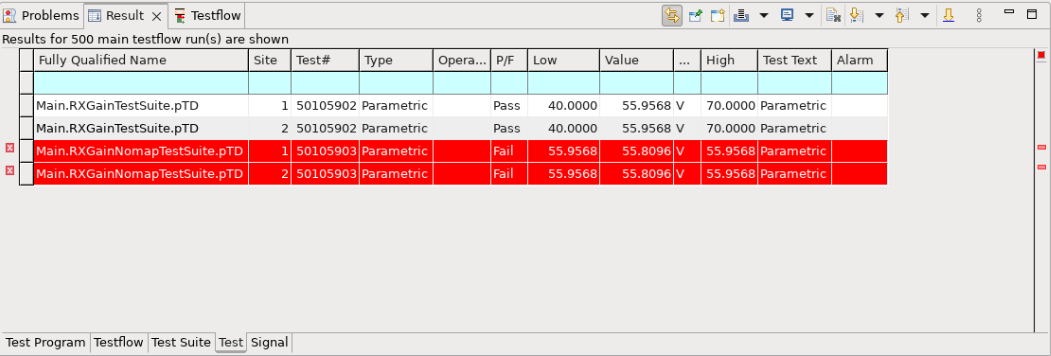
Visualize Results#
To witness the limit changes, open the Result perspective in SmarTest8. In the Test tab, the new limits will be displayed:
Quit SmarTest#
Click “X” to exit Smartest once you have completed the DPAT demo
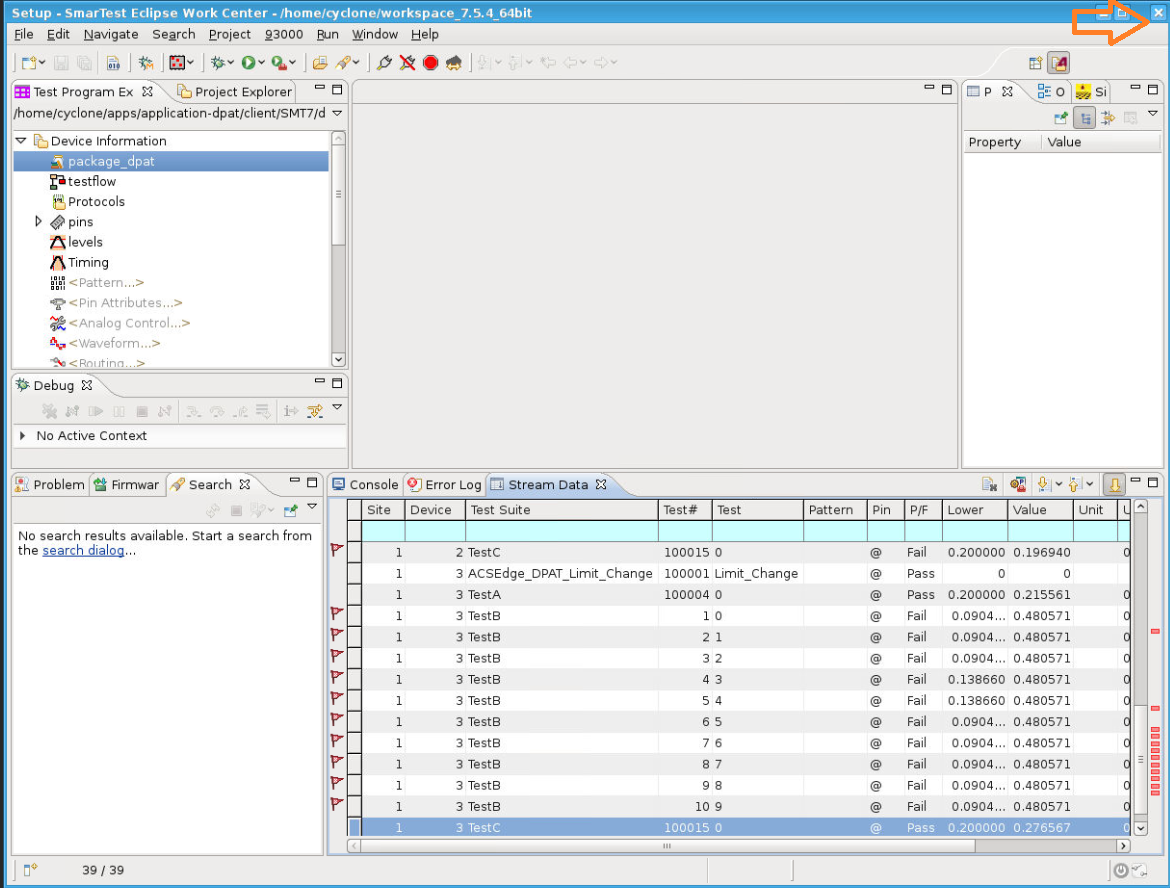
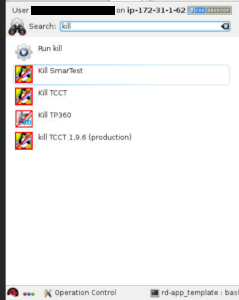
If you need to forcefully terminate SmarTest, open the OS menu and search for “Kill SmarTest” in the search bar.